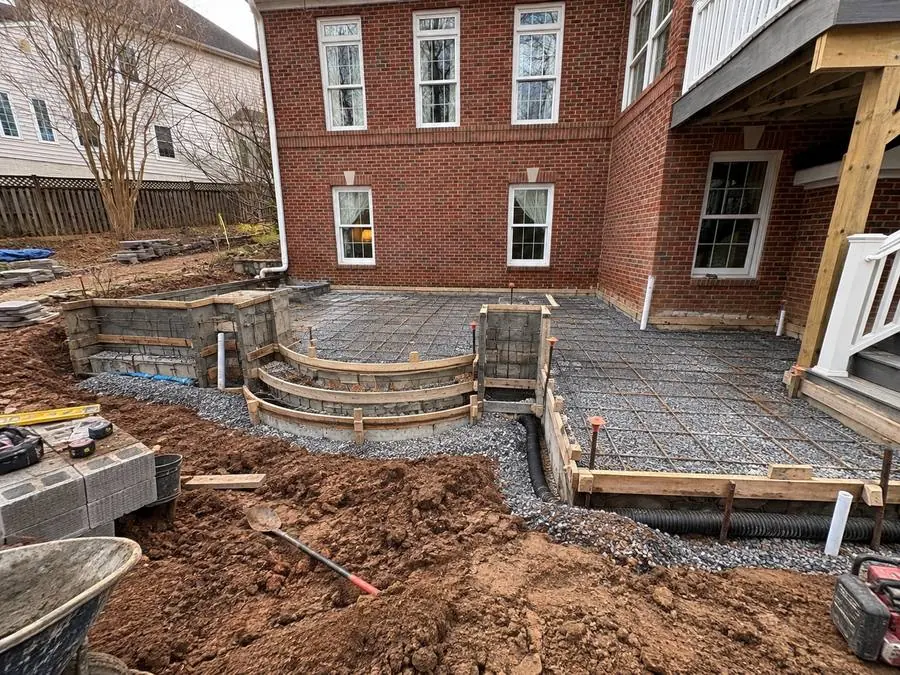
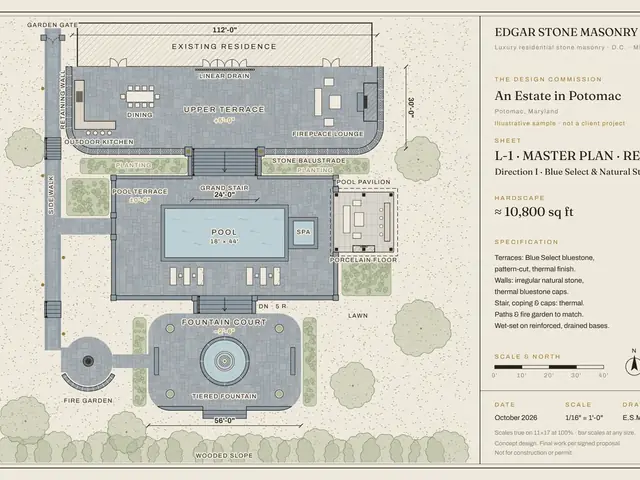
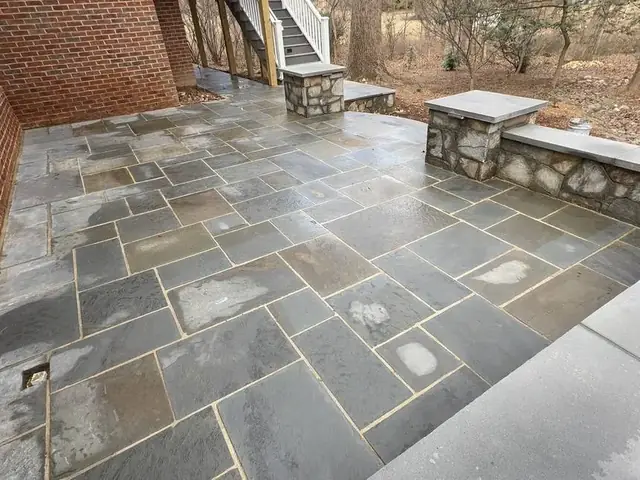
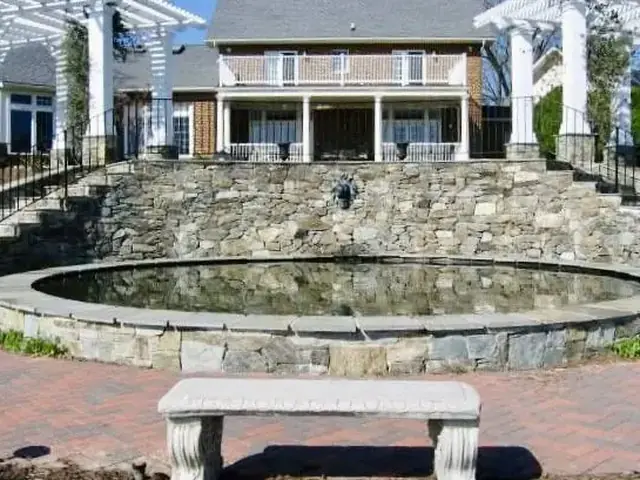
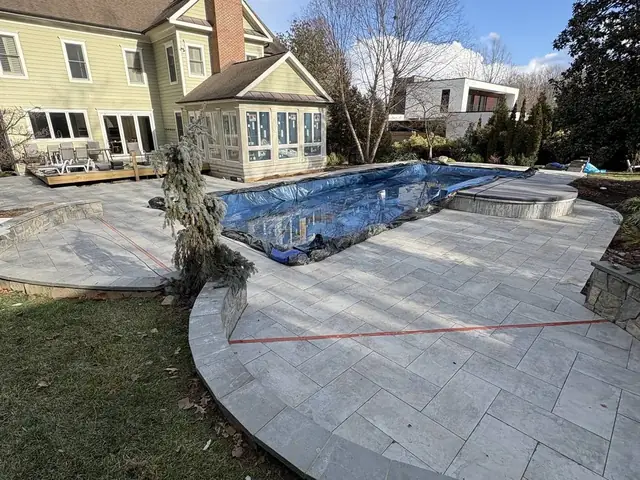
A retaining wall is a structure. It holds back tons of soil and water that are always pushing to come down the hill. Its price follows its job: how tall it is, what it carries, and how much water it has to manage.
The published numbers.
LawnStarter’s 2026 guide puts most retaining walls at $20 to $53 per square foot of wall face, with natural stone ranging widest, at $20 to $90. Its national typical project is around $6,300, with most between $3,500 and $9,400.
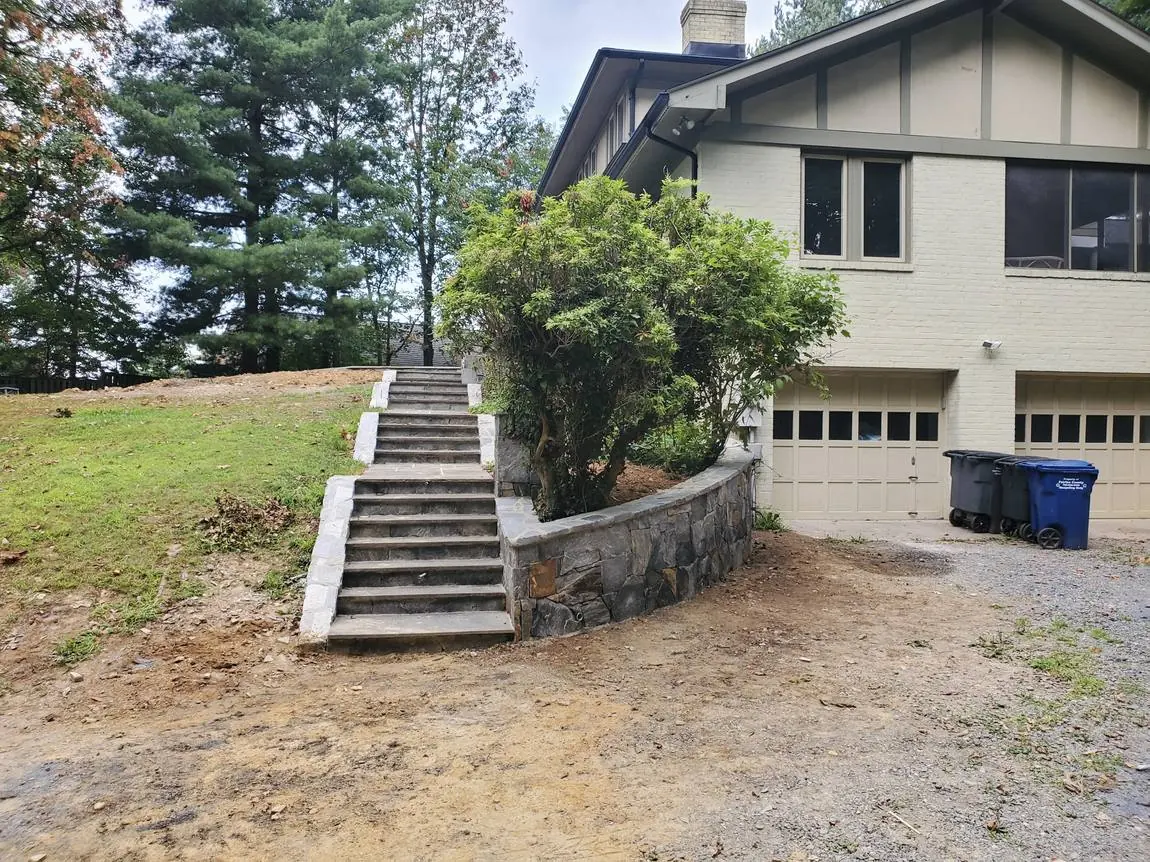
Where the permit line falls.
- Montgomery County, MD — a permit when the wall retains more than three feet of earth, or carries a surcharge, crosses a lot line, sits in problem soils or steps in tiers. The county wants a plat from a Maryland-licensed surveyor, and plans from a Maryland-licensed design professional beyond its standard details.
- Fairfax County, VA — a residential permit when the wall retains more than three feet; above four feet it’s treated as an engineered, commercial-grade wall.
- Washington, D.C., Arlington and Alexandria set their own rules. We confirm yours before design is final.
What moves the price.
- Height. Taller walls need deeper footings, more stone, reinforcement and often an engineer.
- What sits above it. A driveway, a pool or a steep slope above the wall is a surcharge — it changes the design and the permit.
- Drainage. Gravel backfill, a perforated drain at the base and weep holes. Walls lean because of water.
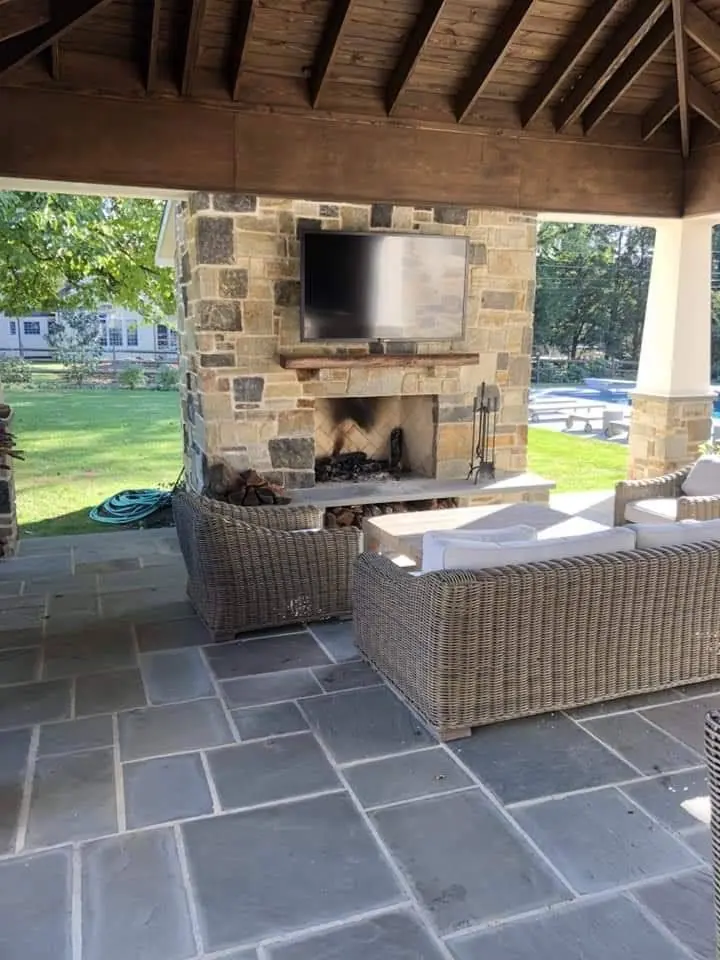
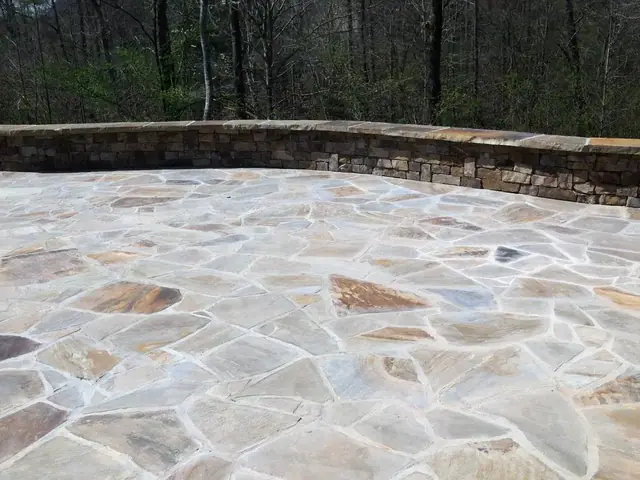
- The stone. Natural fieldstone, cut ashlar and veneer over block are priced differently.
- Access. Tight side yards and steep lots mean more hand work.
Our article on why retaining walls lean shows what a failing wall looks like — and why rebuilding the footing is the only lasting fix.
We never quote from a chart. Edgar walks every site, measures, looks at what’s underneath and then writes a price — for the scope on the page, with the base and the drainage spelled out. Request a site walk.