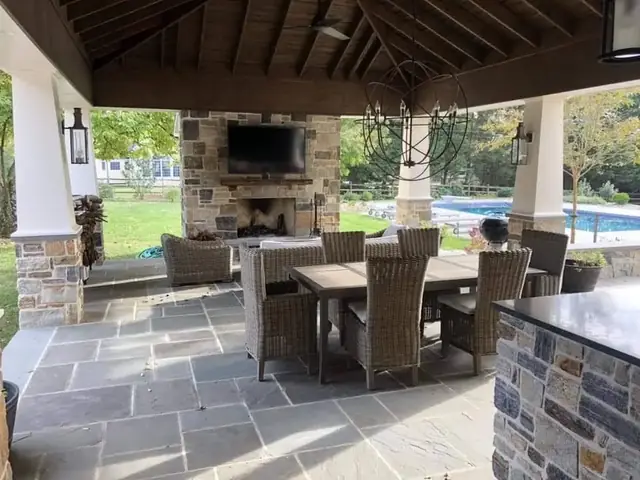
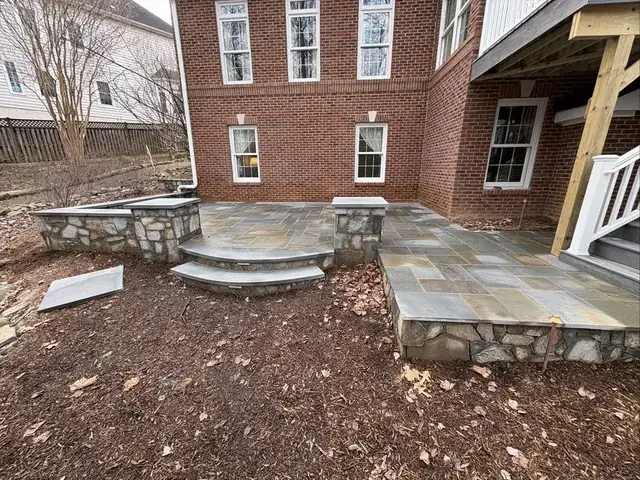
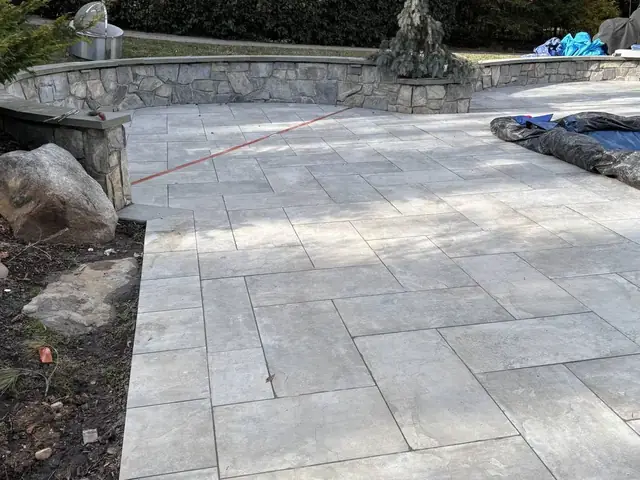
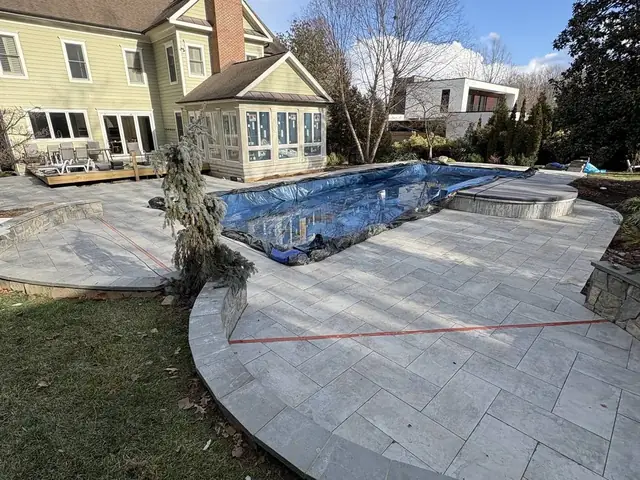
Belgian block is squared granite cobble — nearly indestructible. What you’re paying for isn’t the stone, it’s the setting: the excavation, the concrete bed under every block, and the haunch behind it that keeps the edge from rolling out under a tire.
The published numbers.
This Old House, citing Angi, puts Belgian block itself at about $9 to $11 per linear foot, with professional installation of a border around $1,350 for an average driveway. That’s a simple single row along a standard drive; aprons, double rows and full cobble courts are a different scale of work.
Three kinds of work.
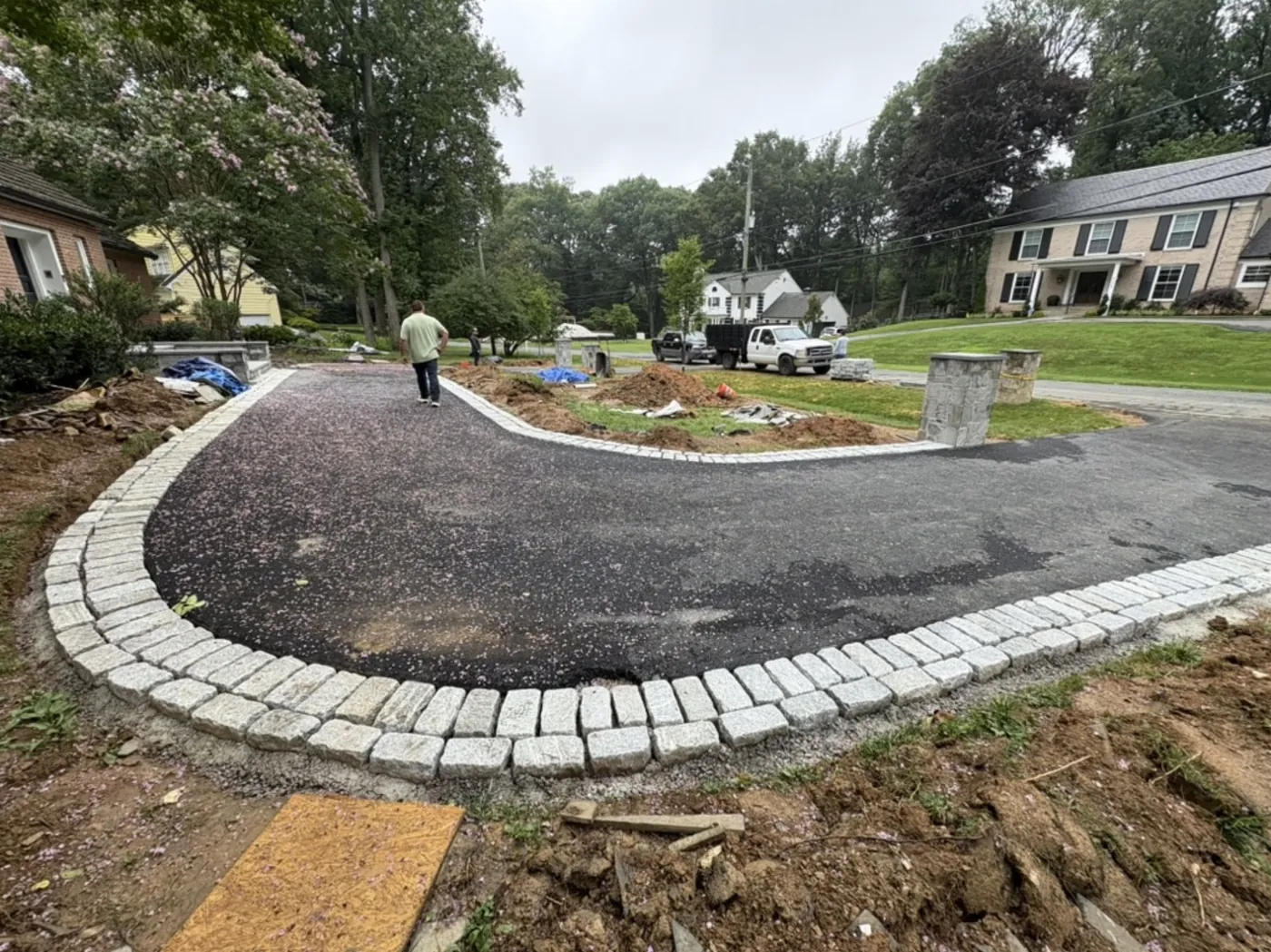
- Borders — a single row along each side of the drive. Priced by the linear foot.
- Aprons and thresholds — two or three rows across the bottom of the drive, often in the right-of-way, which can mean a county or VDOT permit.
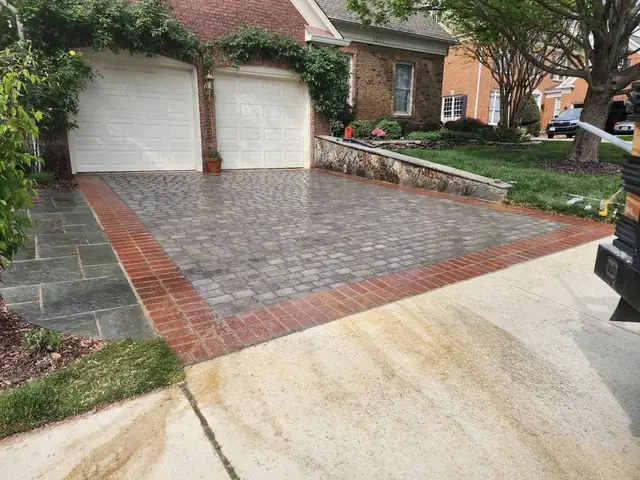
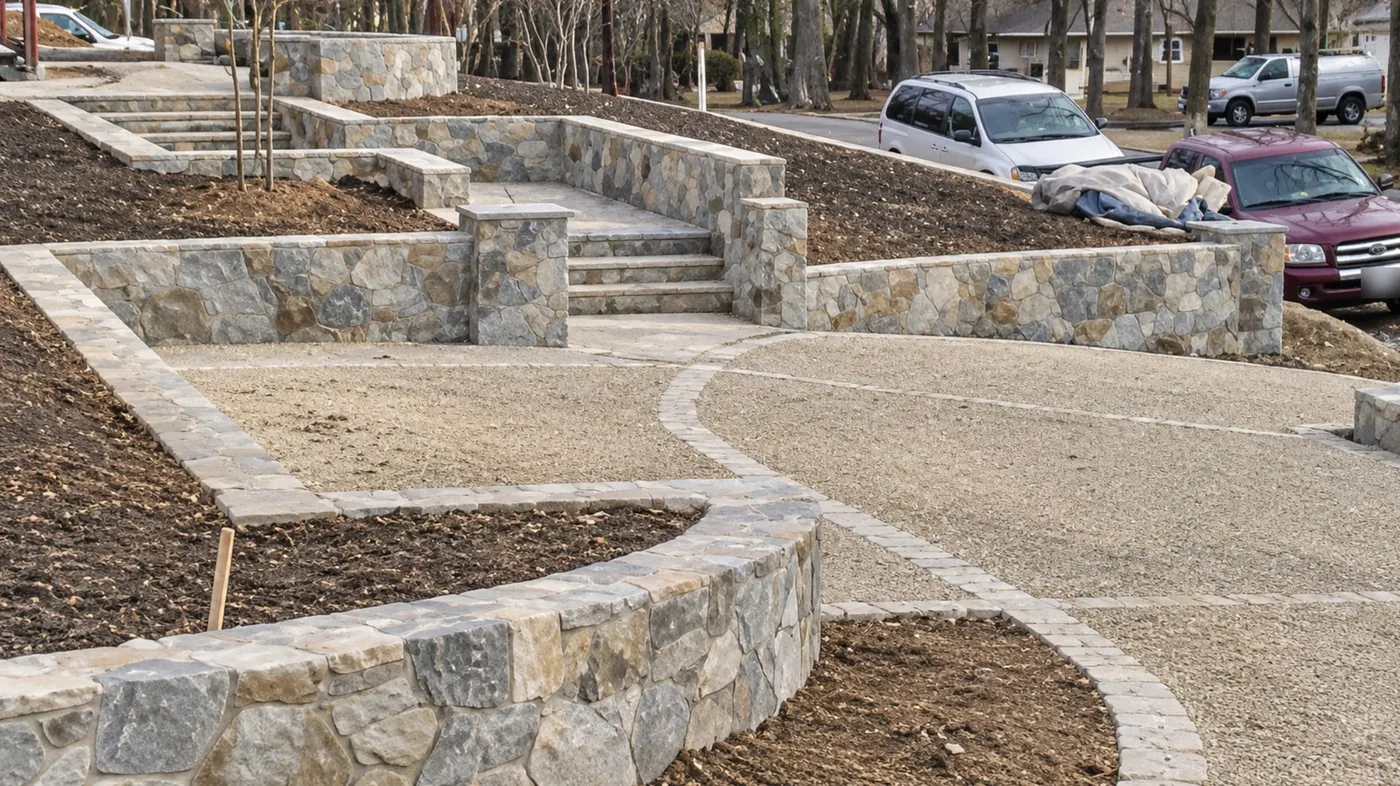
- Full cobble or paver courts — an entire motor court, priced by the square foot, built on a compacted base designed to carry vehicles.
What moves the price.
- Length and rows. A double row or a three-row apron multiplies the block and the concrete.
- The base. Blocks on a concrete bed with a backing haunch cost more than blocks in gravel — and stay where they’re put.
- Cuts and curves. Radiused drives and courts need every block fitted by hand.
- What’s next to it. Cutting and patching asphalt, or setting a paver field inside the border, adds work.
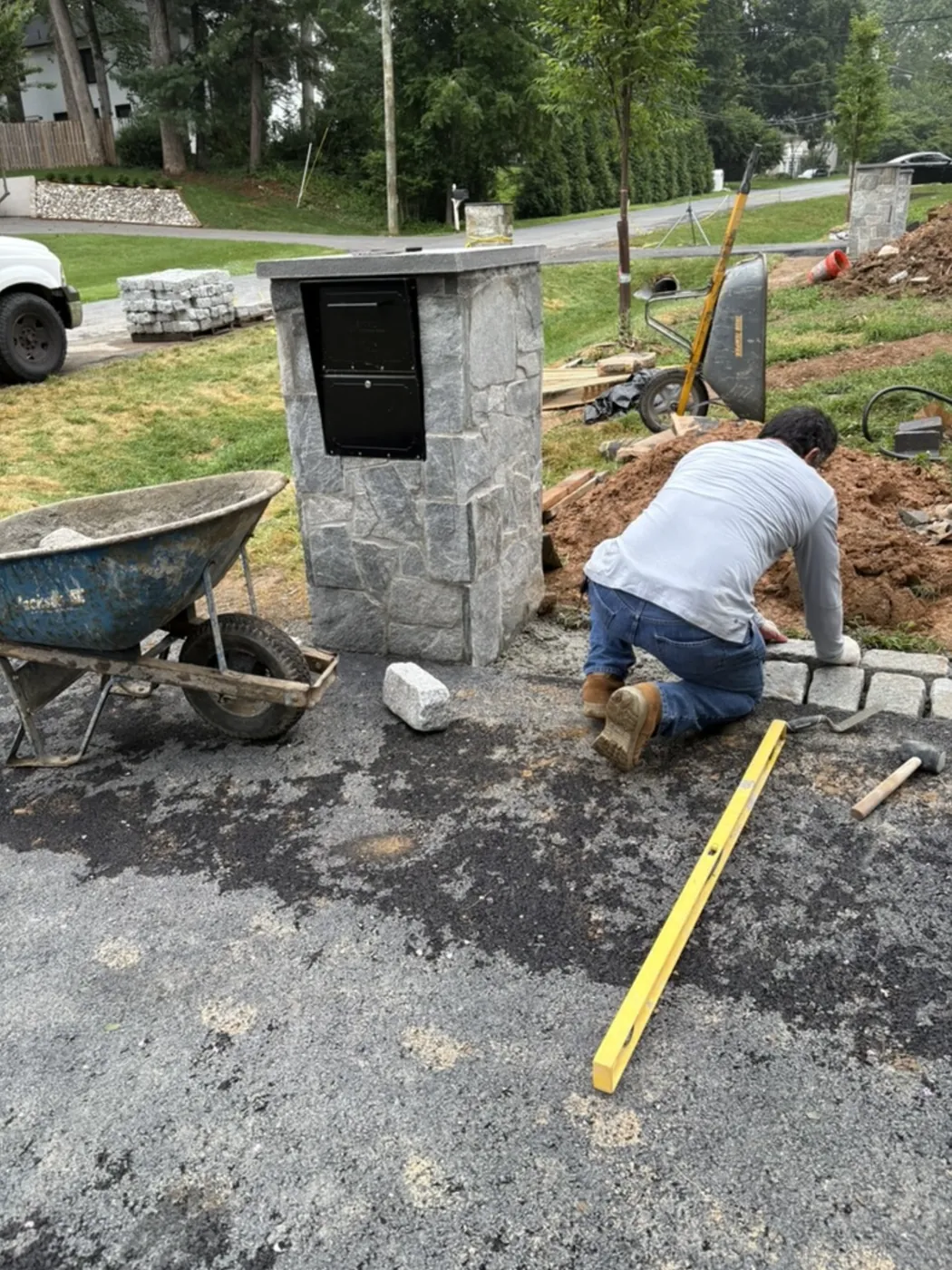
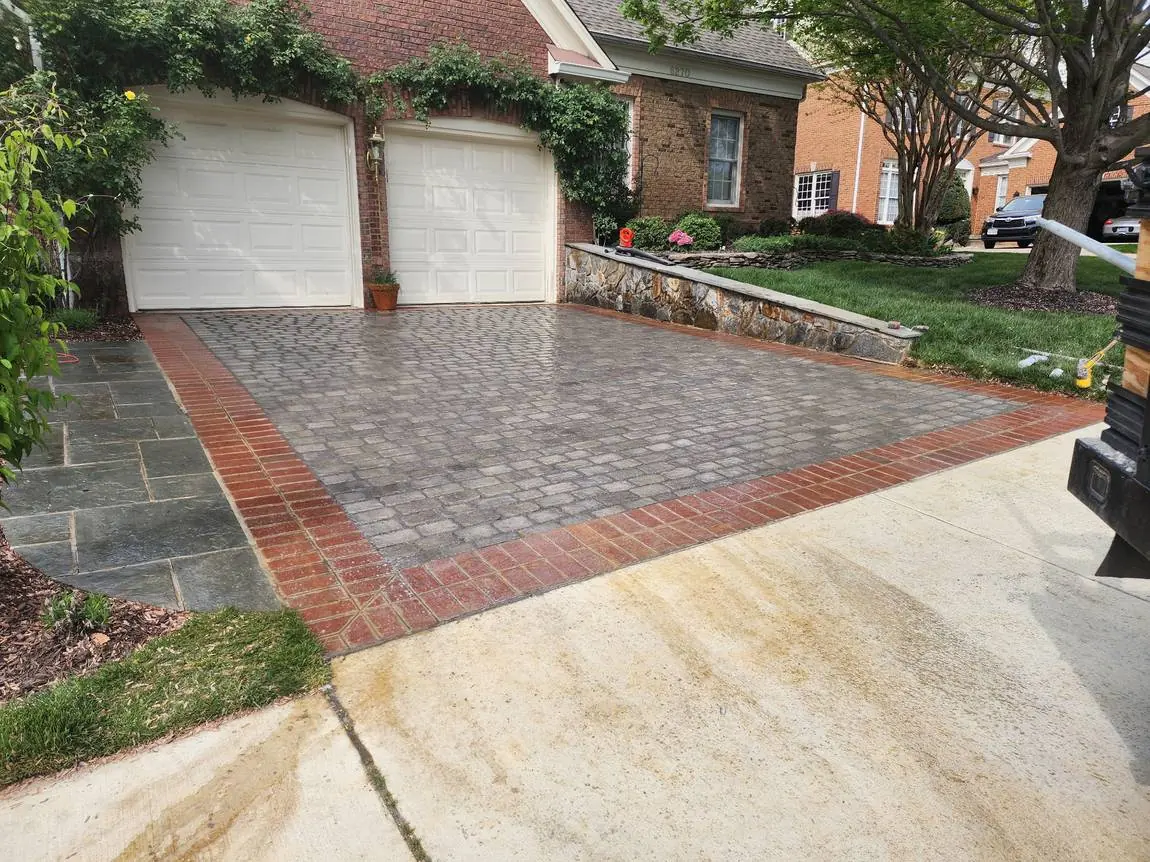
How a border is built to last: Belgian block driveway borders.
We never quote from a chart. Edgar walks every site, measures, looks at what’s underneath and then writes a price — for the scope on the page, with the base and the drainage spelled out. Request a site walk.