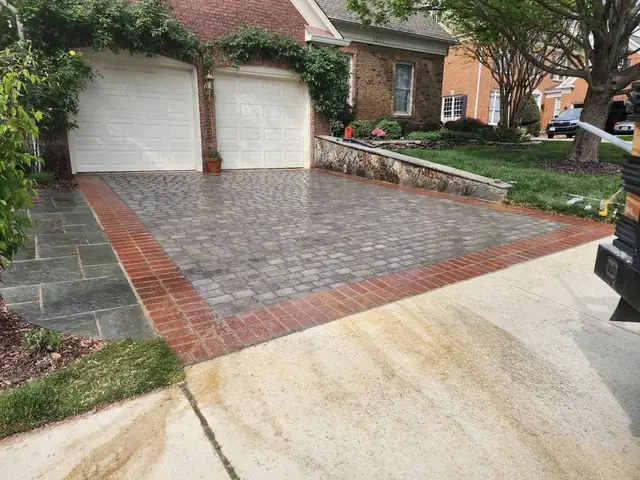
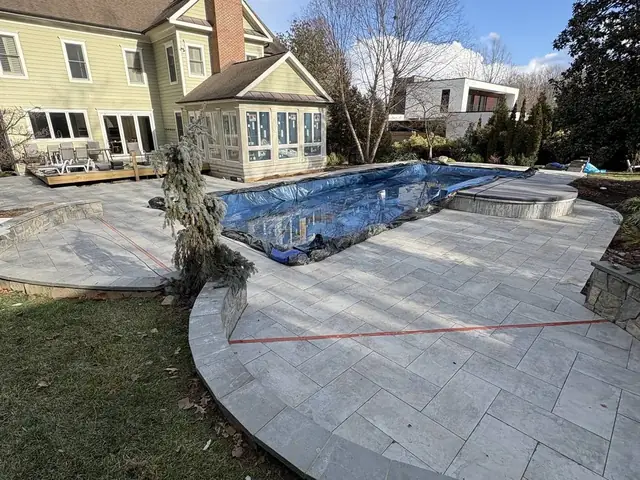
Belgian block is squared granite cobble. It edges driveways across McLean, Potomac and Chevy Chase because it does the one thing an edge has to do: hold its line under tires, plows and decades of freeze and thaw. When a border fails, the granite is almost always fine. What gave way is underneath it.
Where it goes.
- Borders — a single row along each side of the drive, holding the asphalt or paver edge.
- Aprons and thresholds — two or three rows across the bottom of the drive, where it meets the street or the walk.
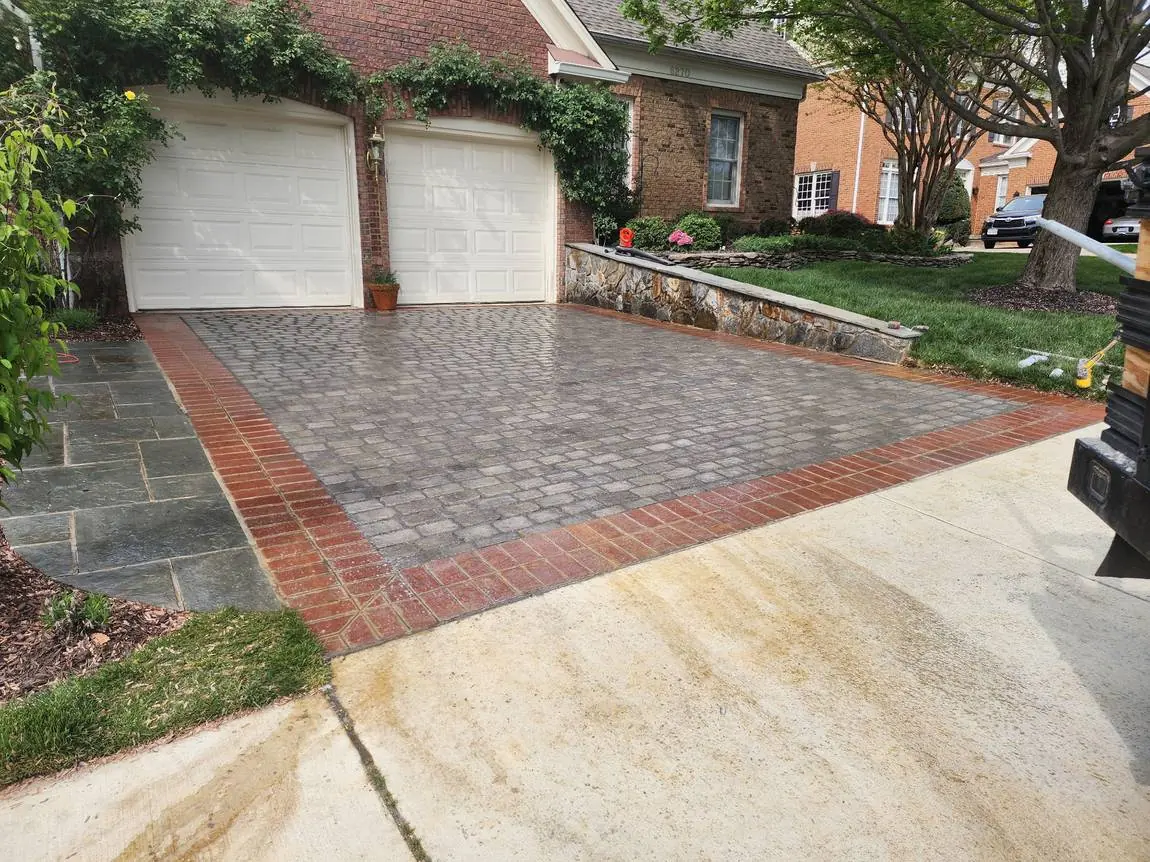
- Full cobble courts — an entire motor court in granite, often framing a paver field.
- Curbing — set on edge, where a bed or lawn meets the drive.
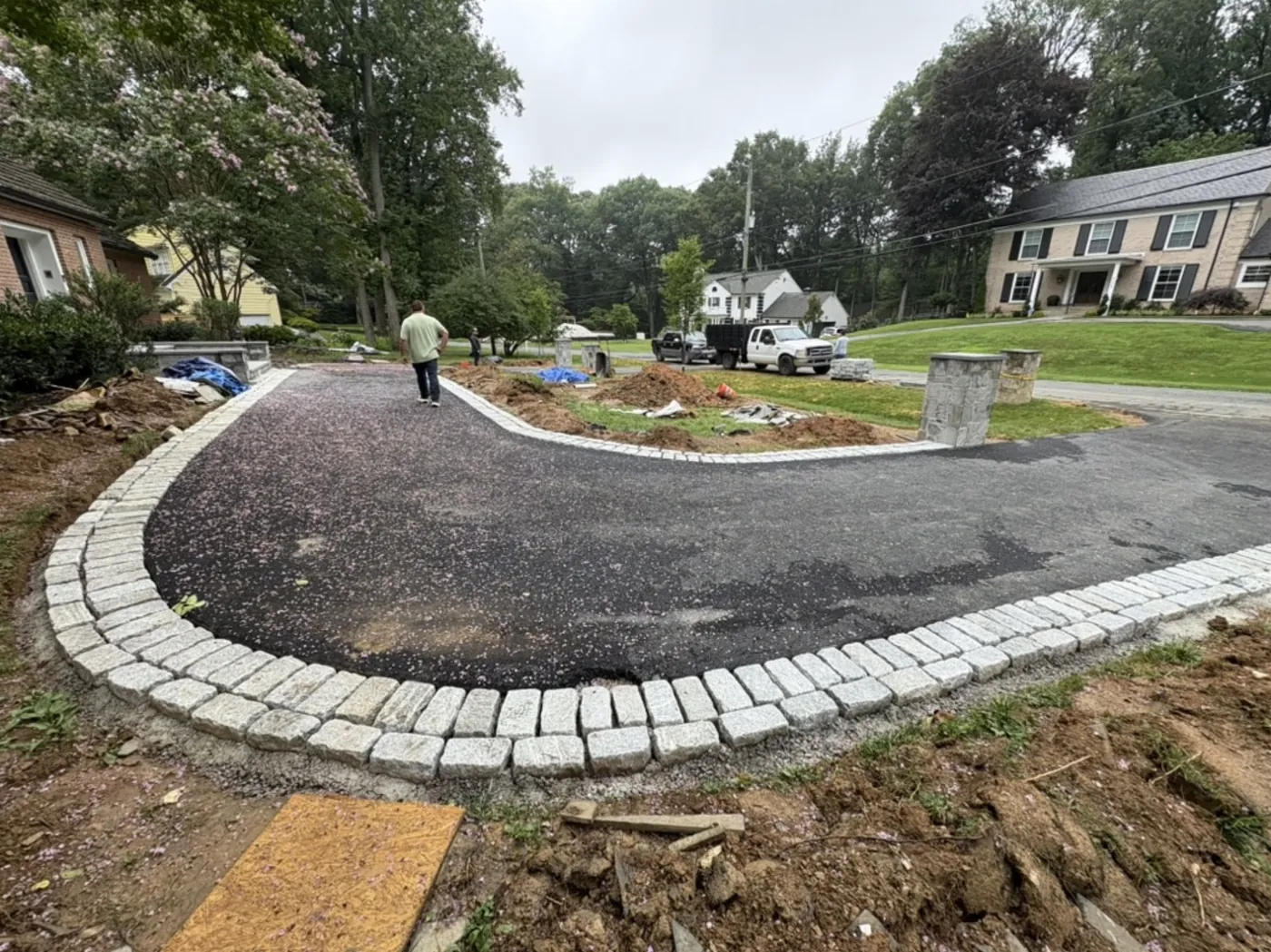
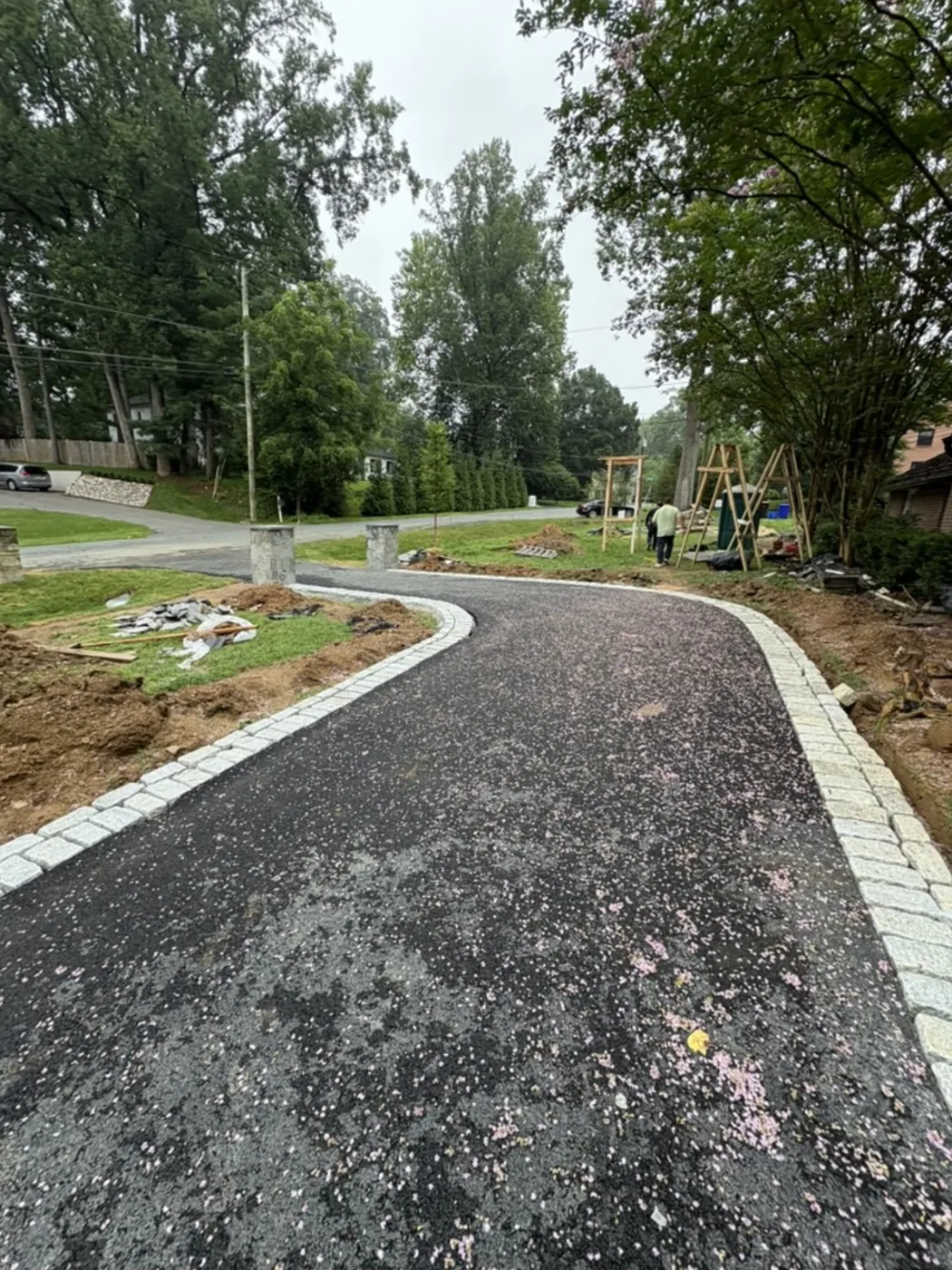
How a border is built to last.
- Excavate along the line, below the drive’s own base, down to firm ground.
- Pour a concrete bed under the blocks — the border sits on concrete, not loose gravel.
- Set each block to a string line, at the finished height, tight to its neighbors.
- Haunch the back — a wedge of concrete behind the blocks, so they can’t roll outward under a tire.
- Joint and finish — mortar joints tooled, and the drive surface finished tight to the block.
Next to asphalt or pavers.
Against asphalt, the edge is cut clean and the block is set flush or a hair below the surface, so a shovel or plow rides over it instead of catching. Against pavers, the border is set first and the paver field is laid to it — the block is what keeps the field from spreading.
Winter, plows and salt.
- Use a plow or shovel with a rubber edge.
- Use sand or calcium magnesium acetate for traction — not rock salt, which attacks joints and concrete.
- Reset a loose block early, before water gets under its neighbors.
Permits at the street.
The apron where a drive meets the road often sits in the public right-of-way, which usually means a permit from the county or VDOT. Edgar tells you on the site visit whether yours does. See our driveways and motor courts.