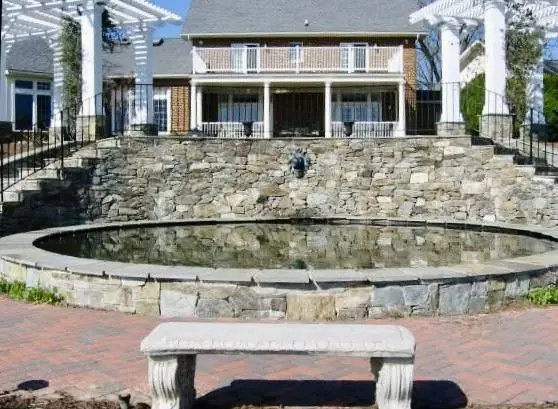
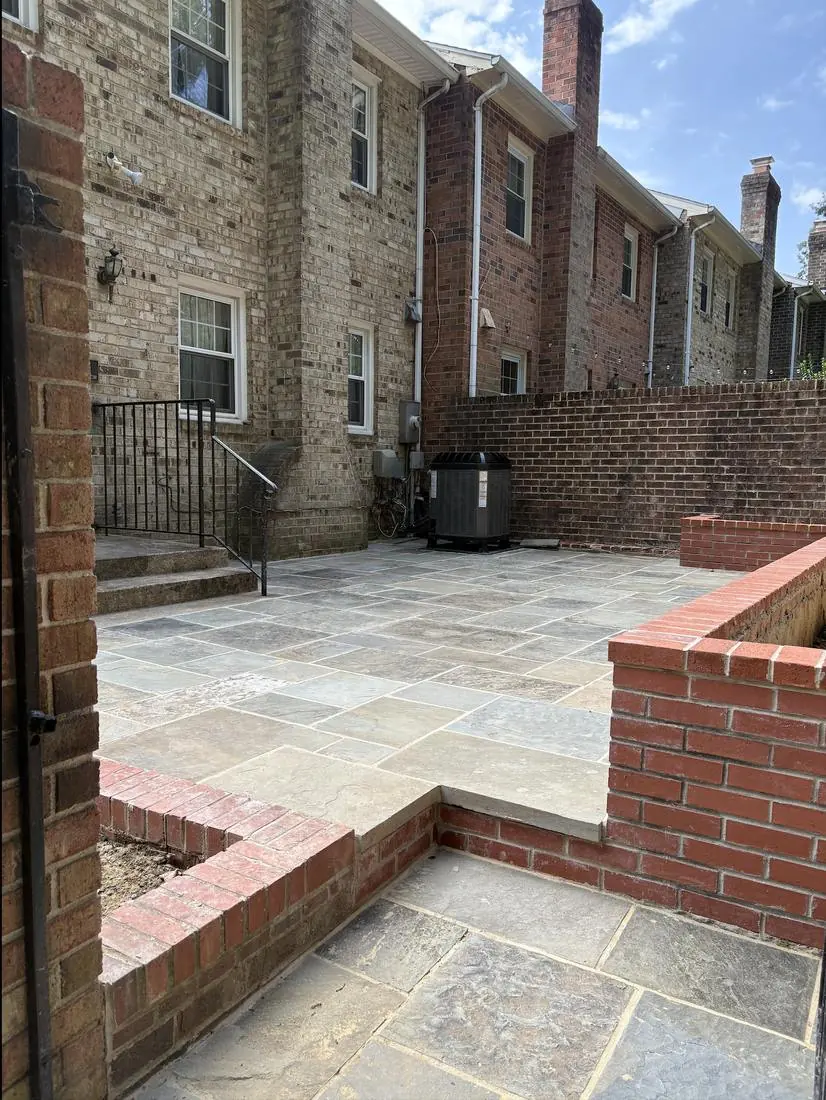
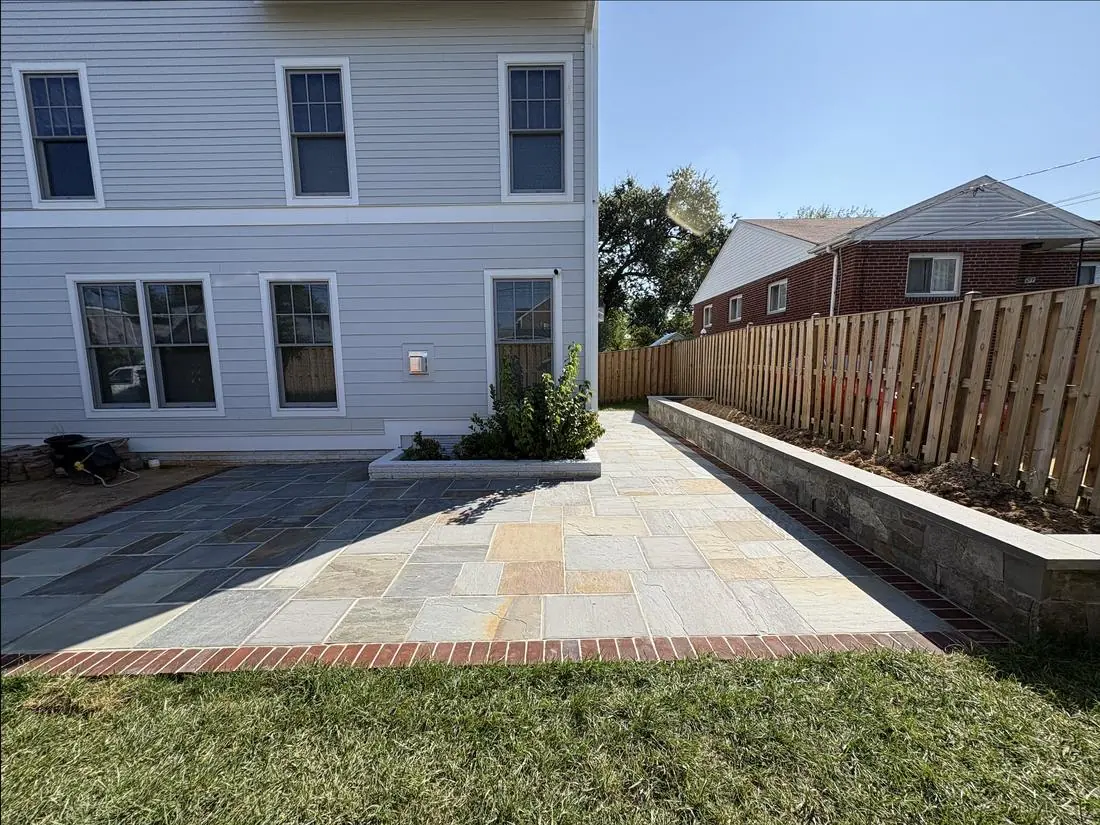
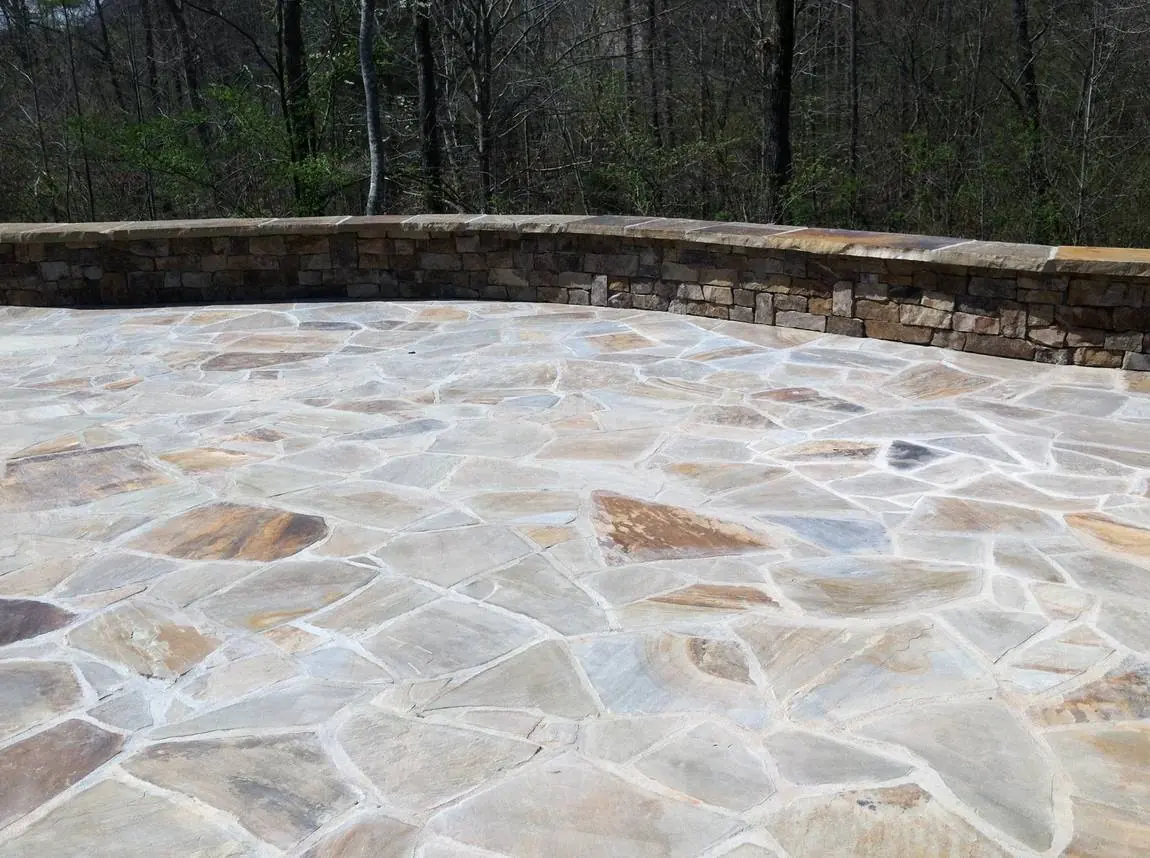
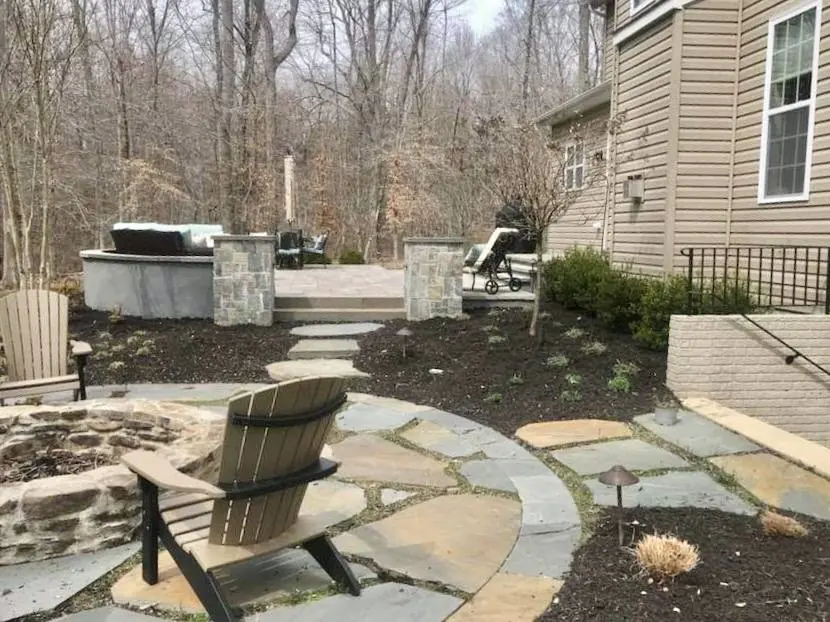
Retaining walls, seating walls and terraced walls in natural stone and boulder — built on a footing, drained behind and capped to shed water, so they stand straight for decades.
Real projects, photographed on site — every one hand-set by Edgar’s crew.
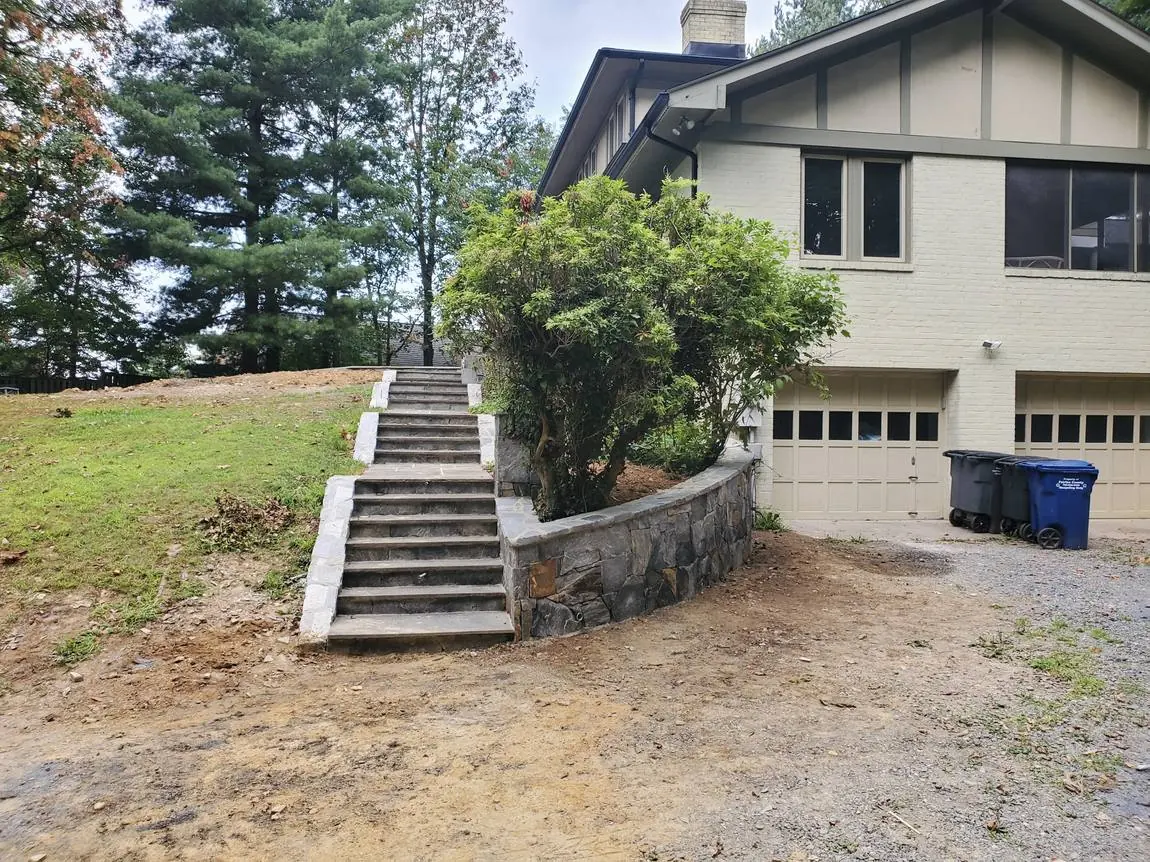


Edgar looks at the slope, the soil and where the water goes — a wall is a structure, not a decoration.
Every wall starts on a footing on solid ground. A wall built on loose soil leans within a few winters.
Drainage stone and a way out for the water behind the wall — because water pressure, not the stone, is what pushes walls over.
Stone is selected, shaped and set course by course, tied together so the wall works as one piece.
A cap stone sheds water and finishes the line — and gives a seating wall a clean edge to sit on.
Compare every stone in The Stone Library.
Almost always water. When the soil behind a wall stays wet, the pressure pushes it out. The lasting fix is a proper footing with drainage behind it.
Taller walls often do, depending on the county. Edgar tells you on the site visit whether your wall is likely to need one — before you sign anything.
Usually the right answer is to rebuild the failing section on a proper footing with drainage. Patching the face of a wall that is being pushed by water only buys a season. See repair & restoration.
Comfortable seating height is roughly the height of a chair seat; Edgar sets the final height with you on site, along with the cap overhang.
We build across D.C., Maryland and Northern Virginia — see our work in McLean · Potomac · Falls Church · Arlington · Washington, D.C.
More of what we build: Flagstone & Bluestone Patios · Chimneys, Fireplaces & Veneer · Outdoor Kitchens & Living · Steps, Walkways & Borders · Repair & Restoration.
Edgar personally walks every site before a single figure is written. Estates are accepted by private consultation — a limited number each season.
Not sure where to start? Plan your commission in sixty seconds →