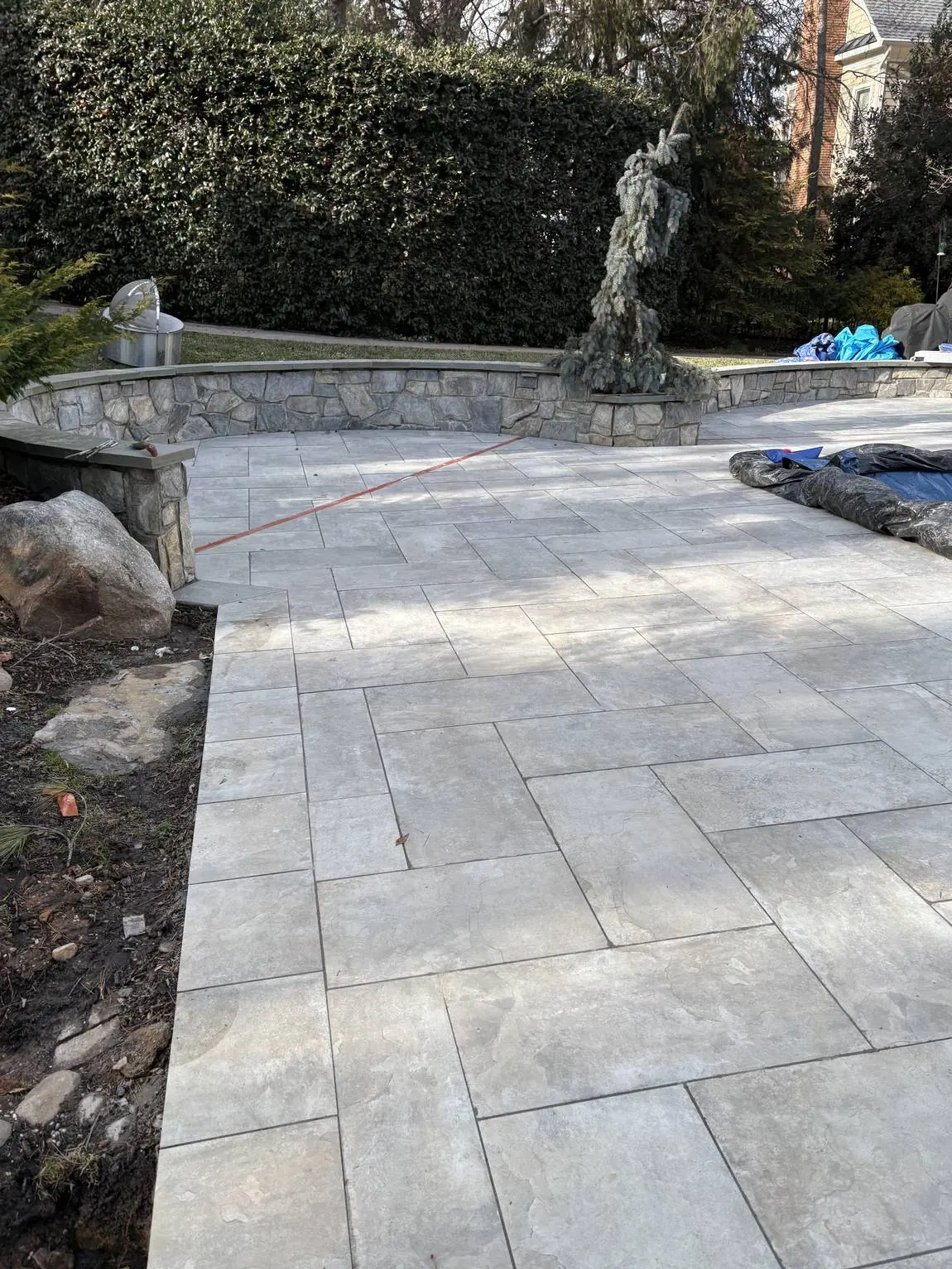
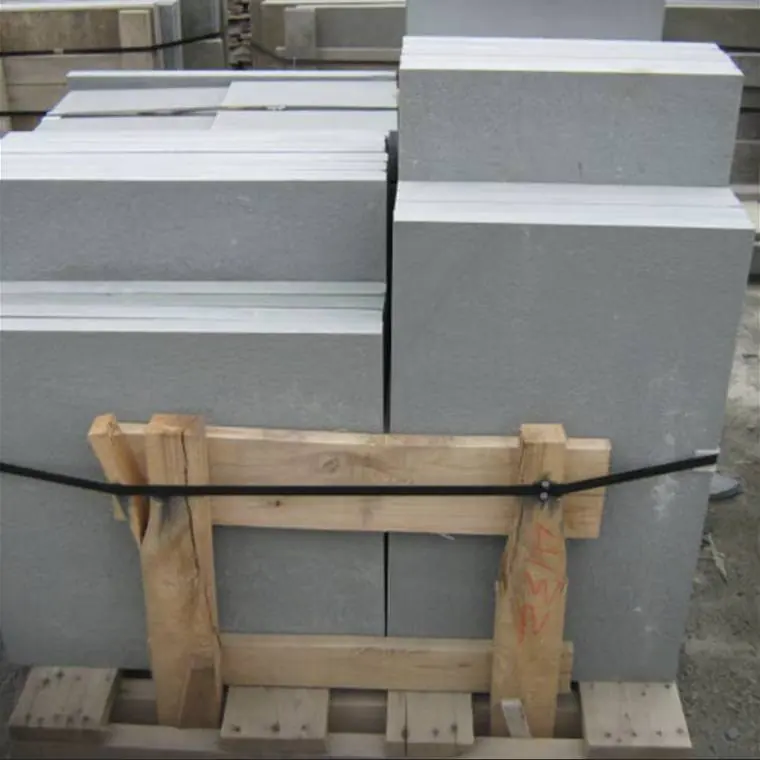
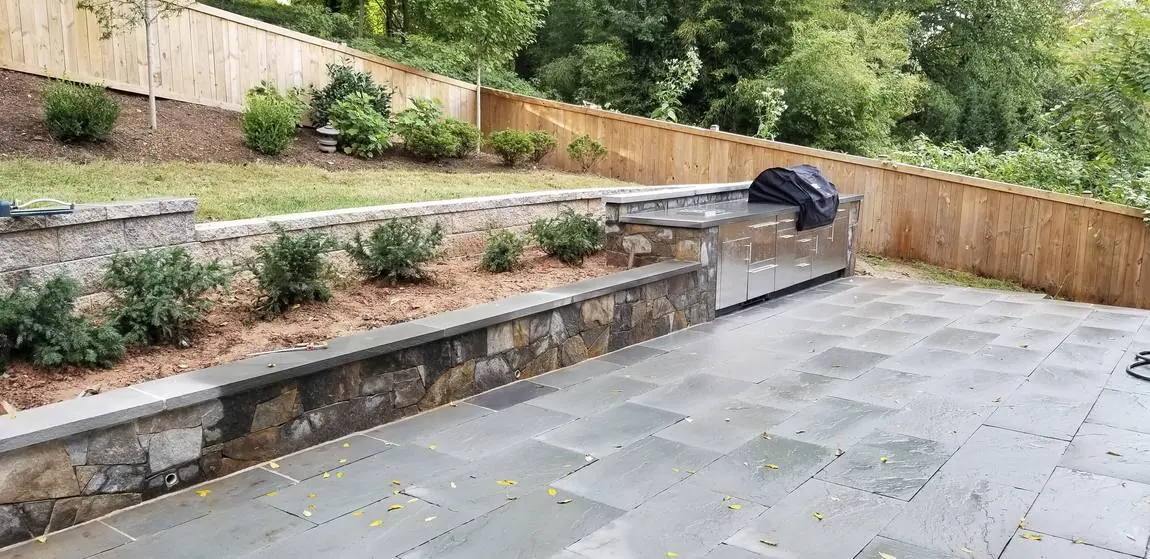
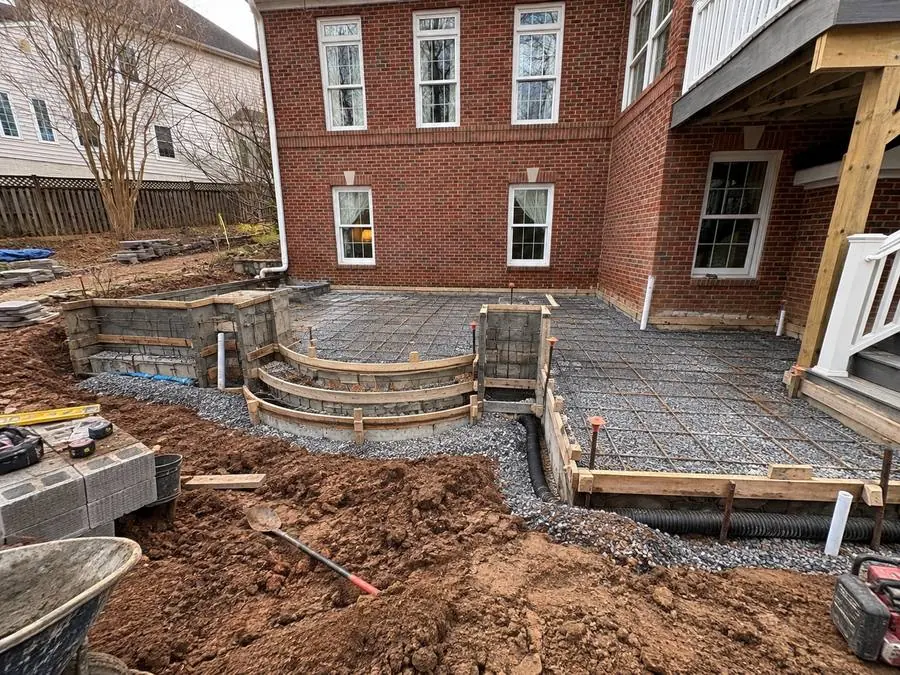
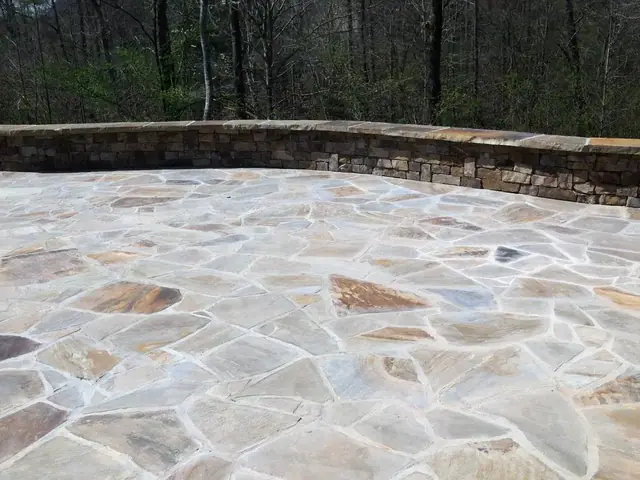
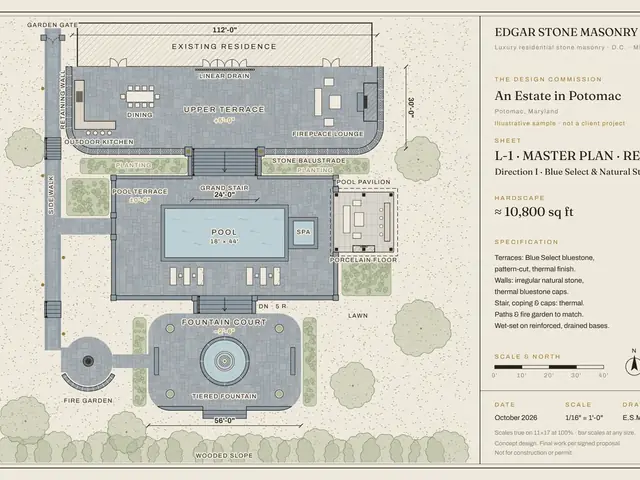
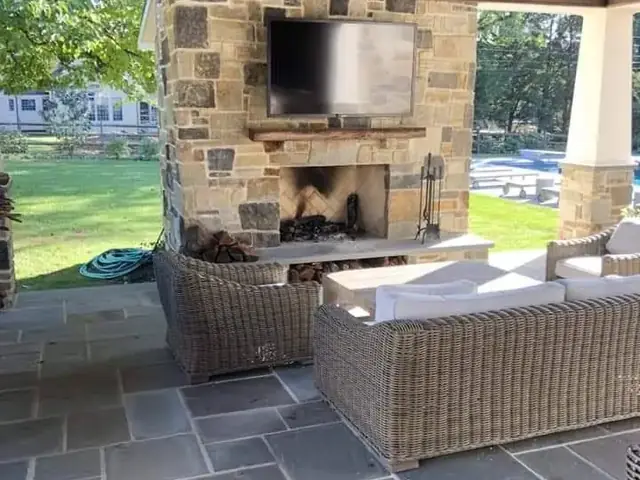
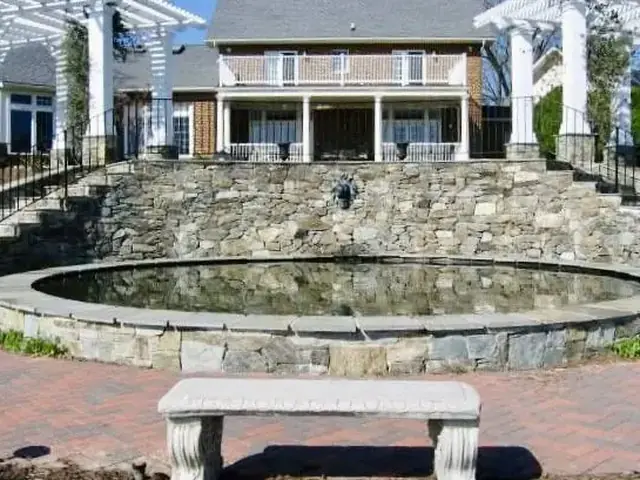
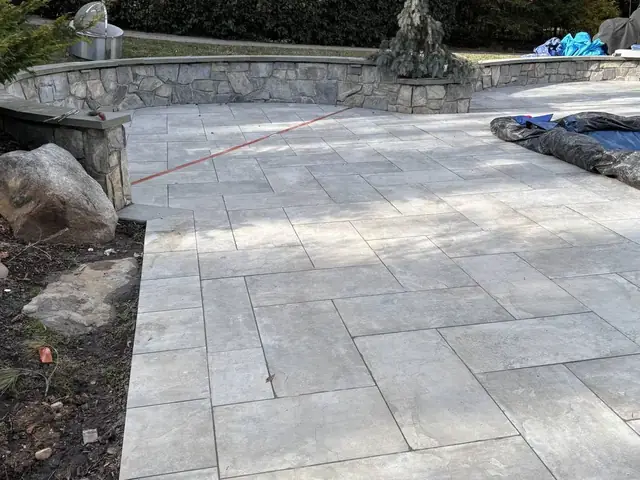
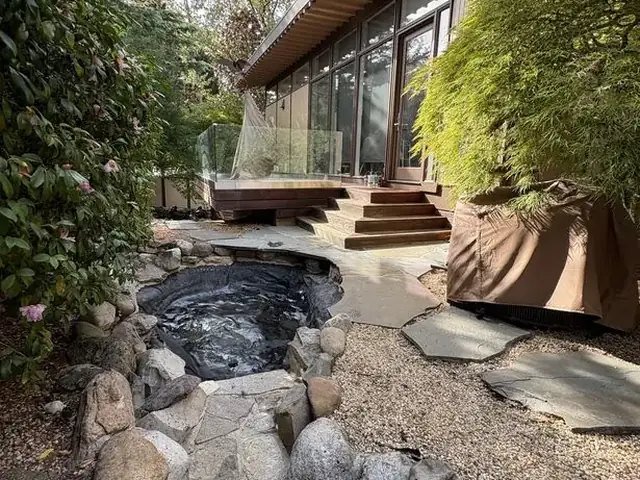
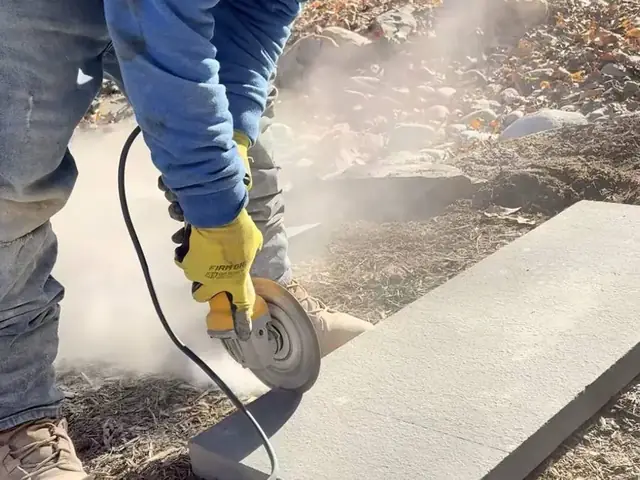
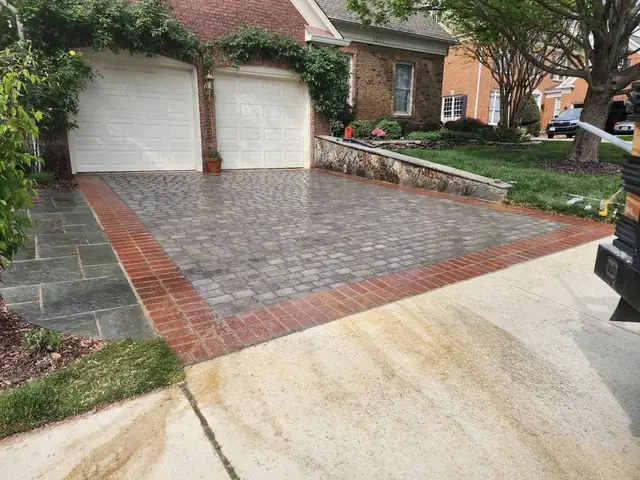
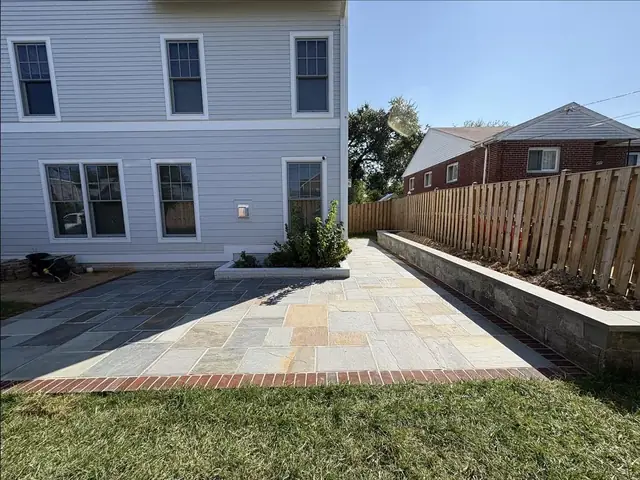
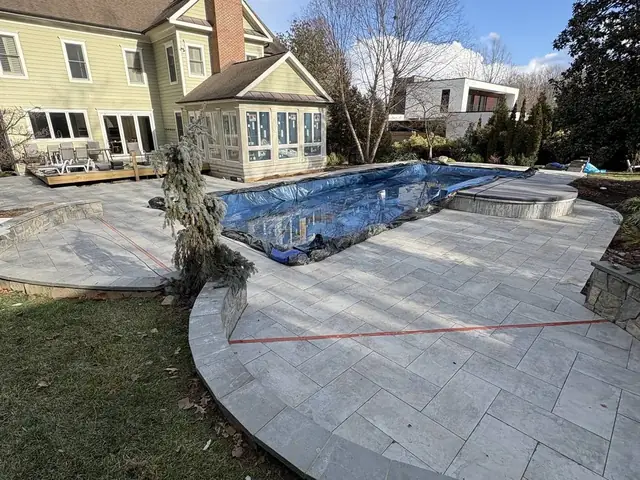
Around a pool, stone works harder than anywhere else on the property: wet feet, full sun, pool chemicals or salt water — and then, here, a winter of freezing and thawing. The deck that looks right in a catalog isn’t always the one that still looks right after ten winters in Potomac or McLean.
Bluestone — the classic.
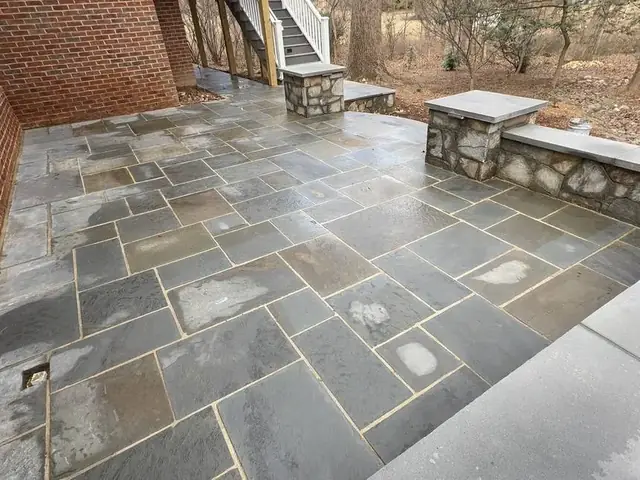
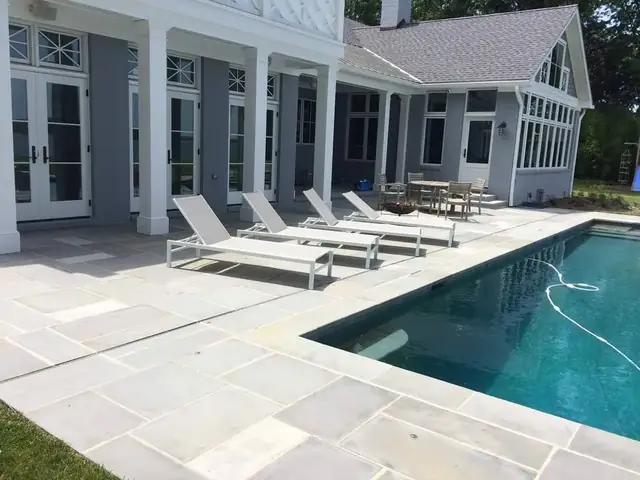
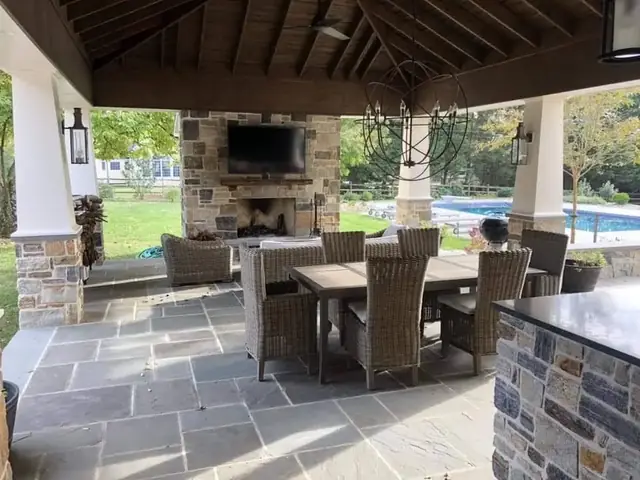
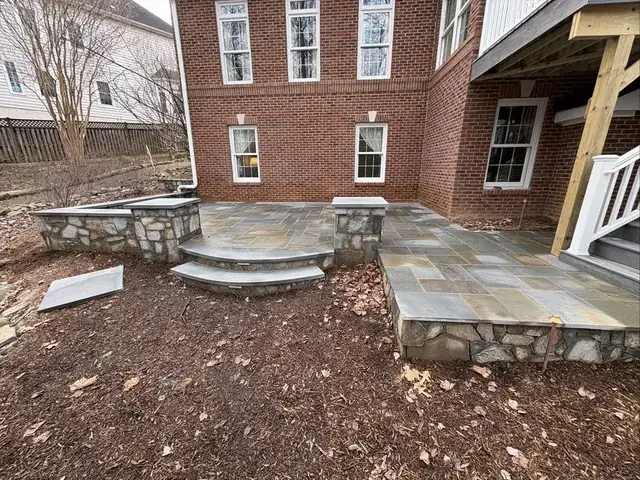
Bluestone is a dense sandstone that has been paving the Mid-Atlantic for well over a century. Set on a reinforced slab, it handles freeze and thaw well, and a thermal finish gives a flat, even surface with good grip. Blue Select reads formal and consistent; full-range brings lilac, rust and green into the deck.
The trade-off is heat. In full sun on a July afternoon, darker bluestone gets hot underfoot. Shade, a lighter finish, or using bluestone for the coping and a lighter material for the open deck all help.
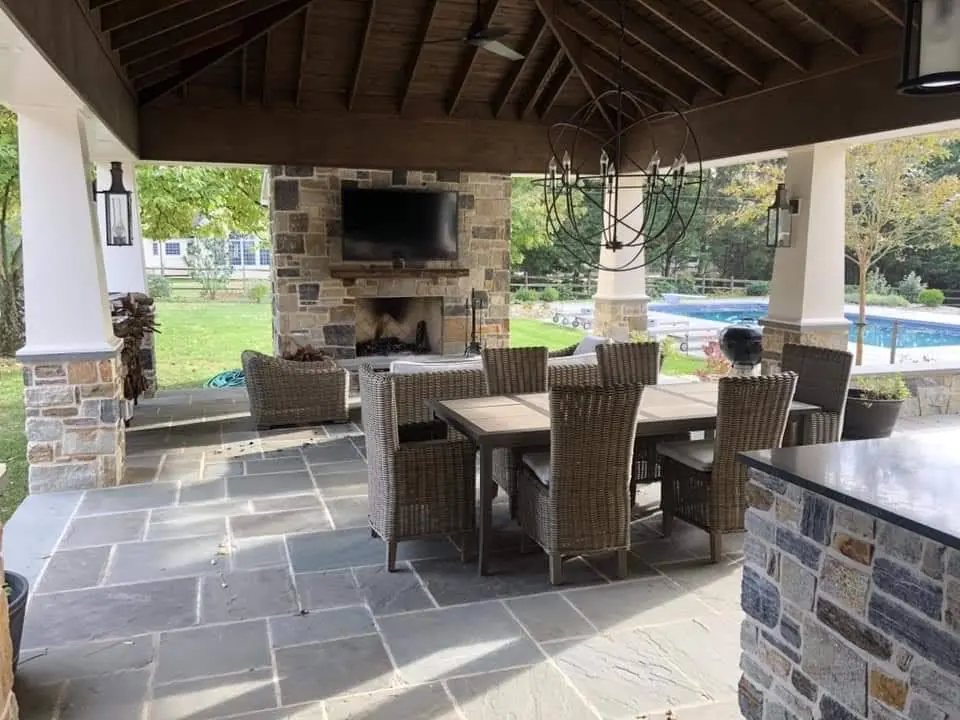
Travertine — cool and soft.
Travertine is a limestone formed around mineral springs, full of small natural voids. It stays comparatively cool in the sun and has the warm, soft color many people picture around a pool.
In our climate, those voids are the question. Water that gets into stone and freezes expands. So we only set travertine in a dense, exterior grade made for freeze-thaw, thick enough for the job, sealed with a breathable sealer, and on a base that drains — never on a slab that holds water. Salt-water pools are harder on natural stone in general; sealing and a freshwater rinse help.
Porcelain — the low-maintenance choice.
Outdoor porcelain pavers are fired so dense that they absorb almost no water — porcelain is defined as tile that absorbs 0.5% or less. With no water inside, there is nothing to freeze. They never need sealing, the color is consistent from piece to piece, and the textured outdoor finishes grip well when wet.
Porcelain has to be set the right way: on a bonded mortar system made for porcelain, not an ordinary mortar bed, and with the joint and movement-joint layout its manufacturer calls for. Set like stone, it pops loose.
The coping is its own decision.
The coping sits on the pool’s bond beam and takes more abuse than any other stone on the property. Many of the best decks mix materials: bluestone coping with a bullnose edge, and porcelain or travertine on the open deck. Whatever the stone, the deck slab must be separated from the bond beam by a full-depth expansion joint, sealed — it’s the detail where most pool decks fail. We publish ours in The Edgar Standard, sheet SD-3.
Five questions for any pool deck bid.
- Is the material rated for freeze-thaw?
- How is the deck separated from the pool’s bond beam?
- What’s the setting system — a full mortar bed for stone, a bonded system for porcelain?
- Where does the water on the deck go?
- What’s the warranty on the coping, in writing?
See our pool decks, coping and porcelain work, or ask Edgar to walk your pool.