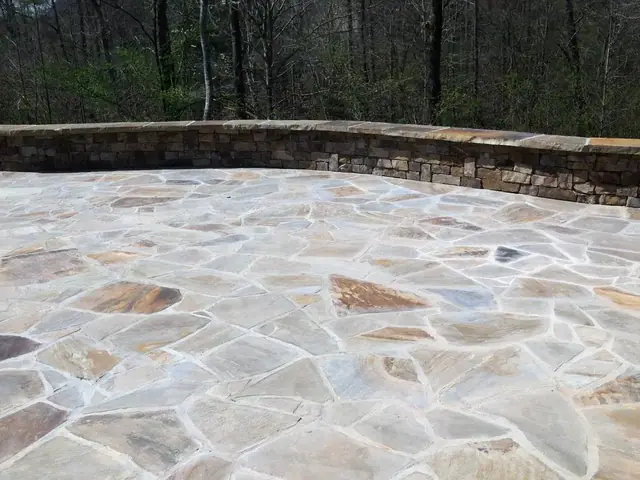
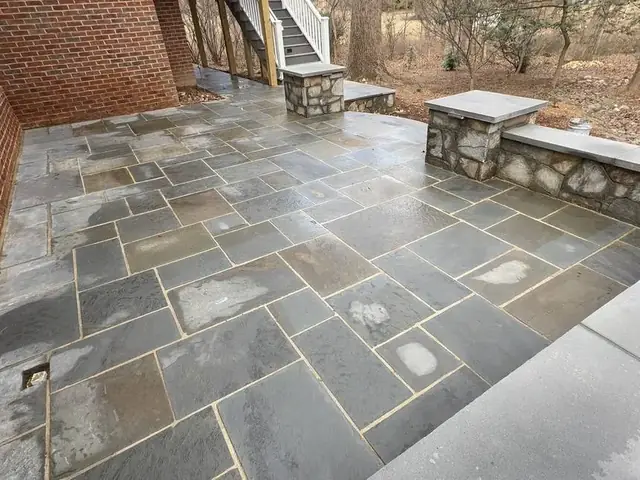
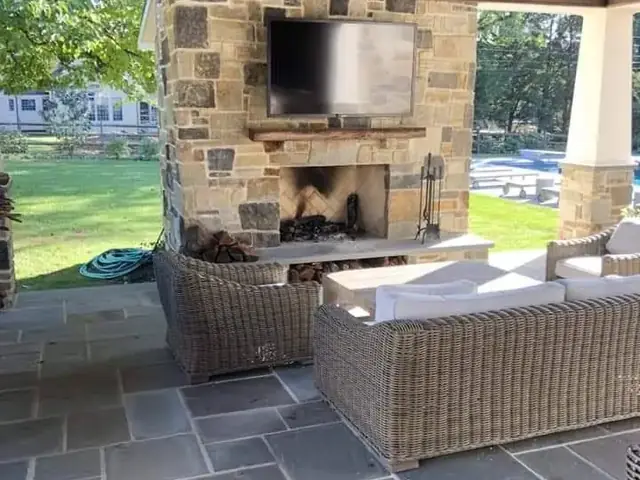
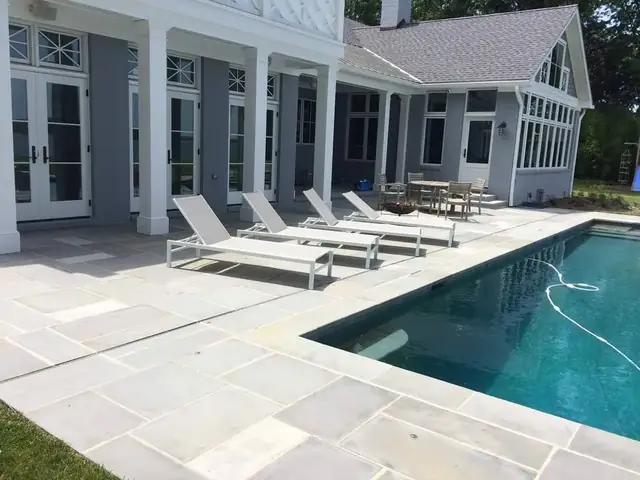
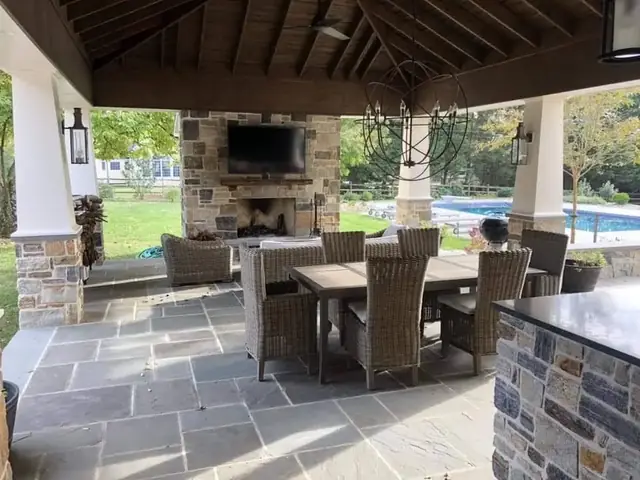
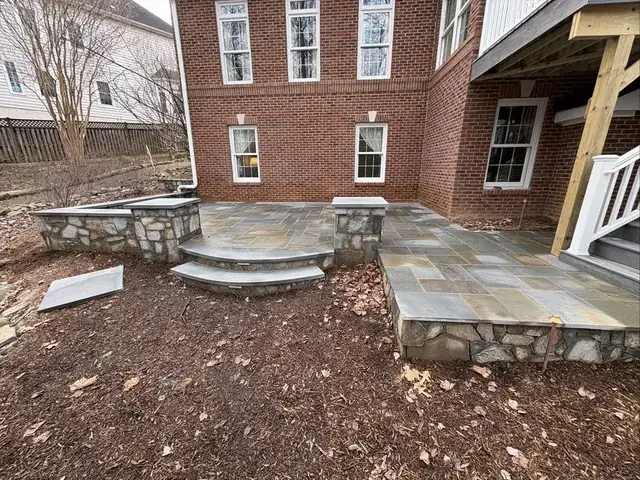
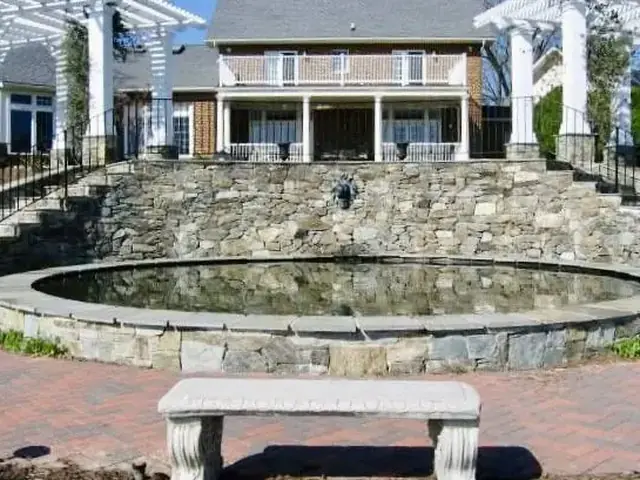
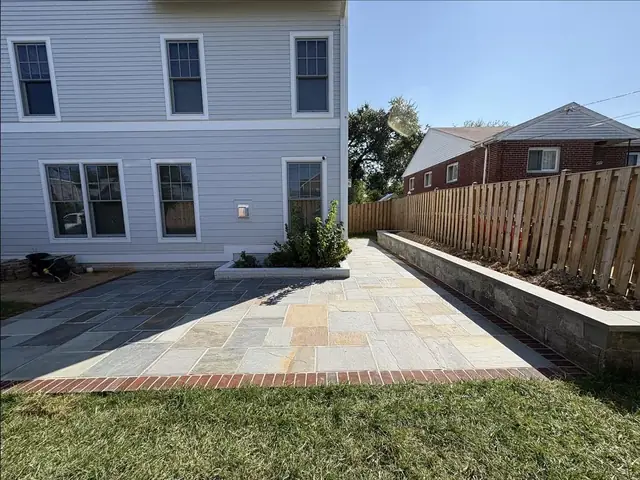
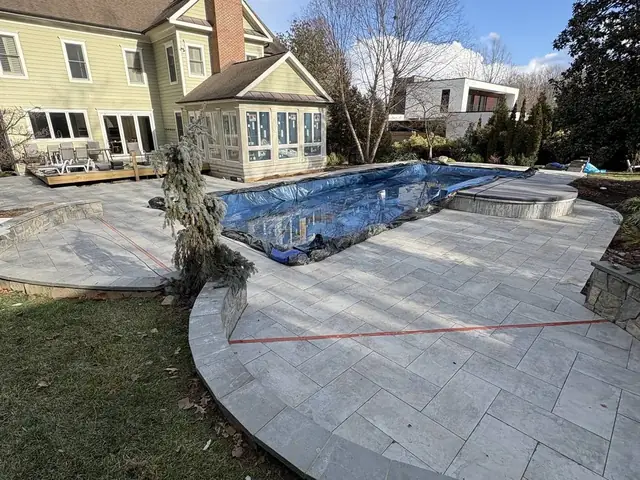
Stone doesn’t leak. Joints do. Every wall, chimney, step and wet-set terrace depends on its mortar joints to keep water out of the core and the bed. When joints fail, water gets in, freezes, and starts moving stone. Repointing stops that cycle.
The signs to look for.
- Recessed joints — mortar worn back from the face of the stone.
- Cracks running along or through the joints.
- Sandy, crumbling mortar that comes away when you rub it.
- Gaps you can see light or slide a coin into.
- Loose or rocking stones on a step, cap or terrace.
- Staining or efflorescence spreading from the joints — a sign water is moving through.
How it’s done right.
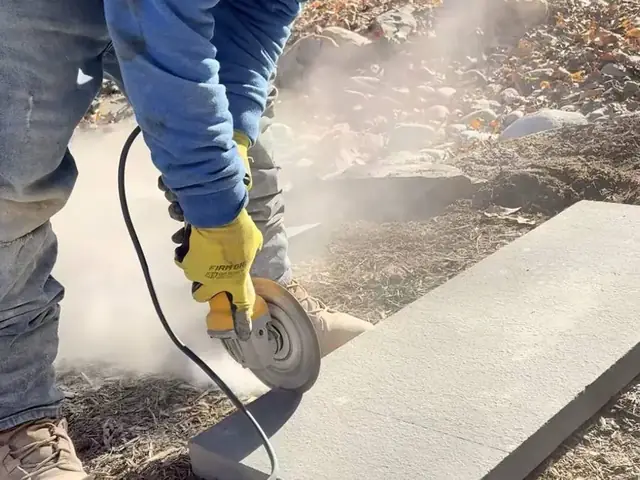
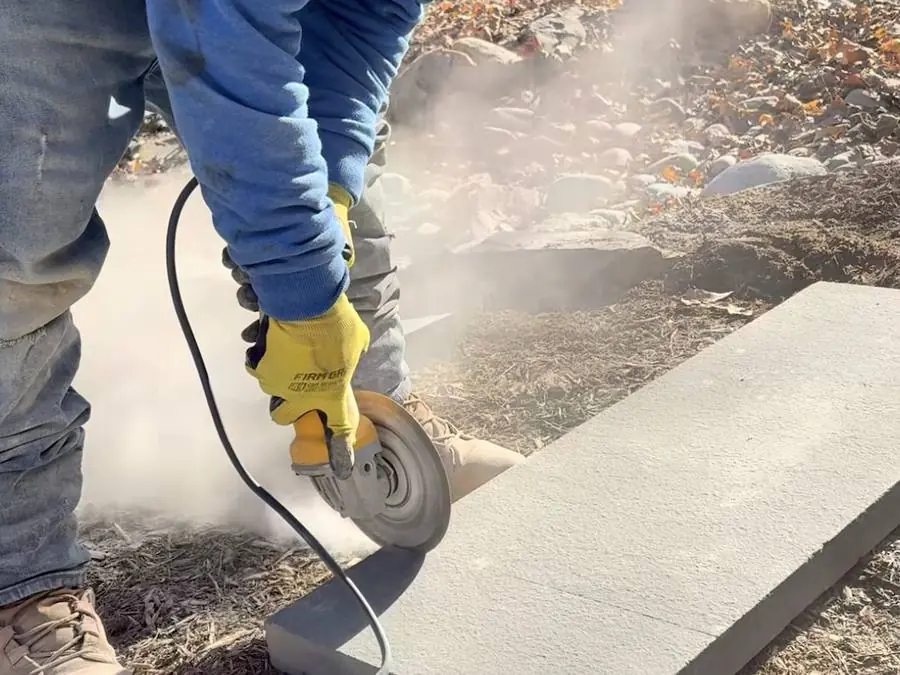
- Rake out the old mortar to sound material — typically to a depth of about two to two-and-a-half times the joint width — without chipping the stone edges. Power tools are used with a shroud and vacuum to control silica dust.
- Choose the mortar for the stone. New mortar should never be harder or less permeable than the stone around it, or the stone becomes the weak point. Older walls and chimneys often call for a softer, lime-rich mix.
- Pack in layers, letting each set before the next, and tool the joint to match the original profile.
- Cure it slowly — shaded and damp, and never in freezing weather.
Timing matters.
Mortar needs to cure above freezing, so repointing is mild-weather work — spring and fall are ideal. That’s also why the late-winter inspection is worth doing: the freeze shows you exactly where the joints have opened, and the work can be scheduled for the first warm weeks.
Seeing open joints? Send the office a photo — or ask Edgar to take a look.