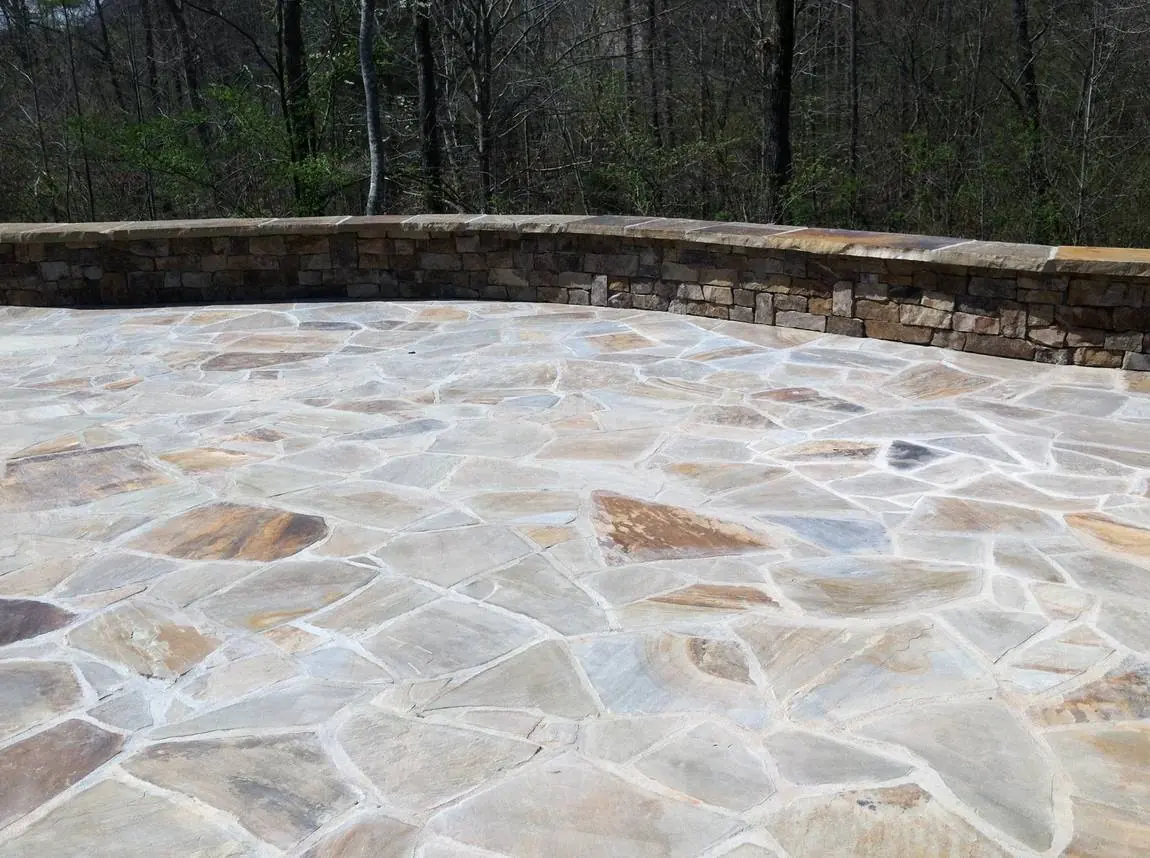
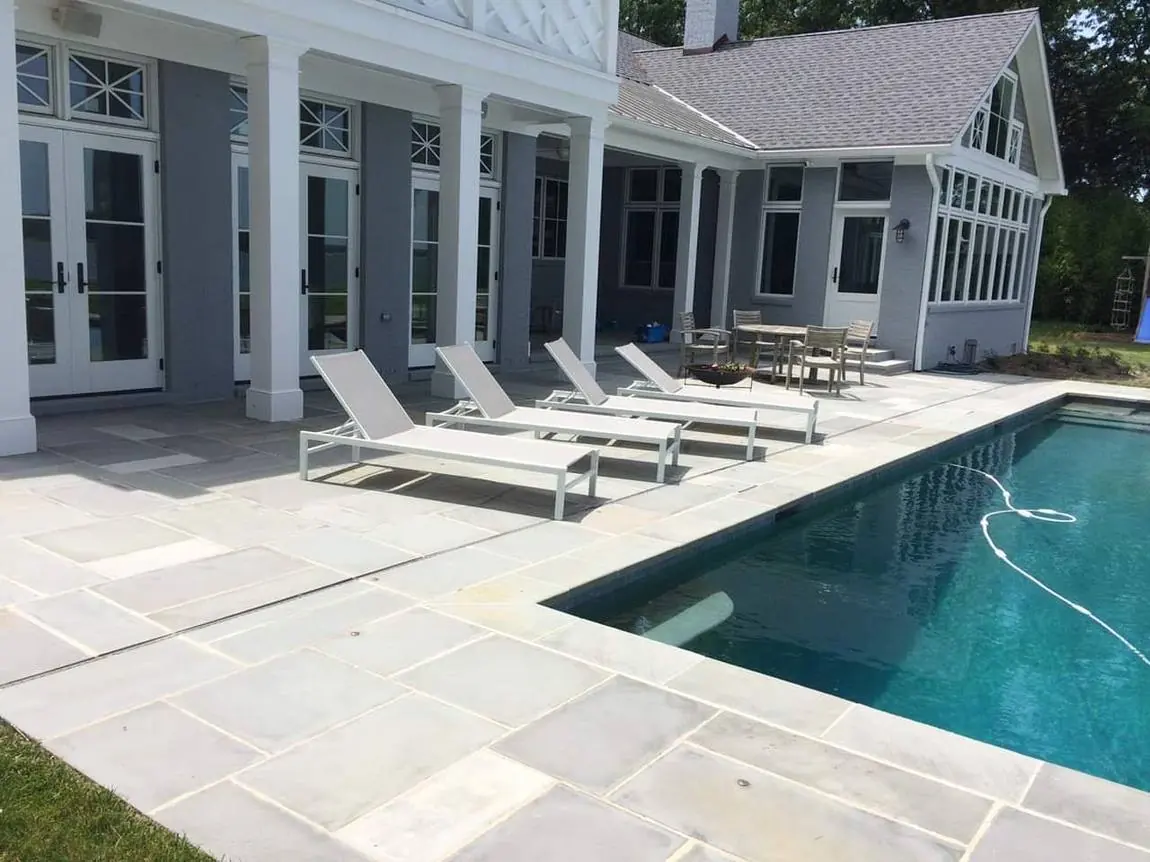
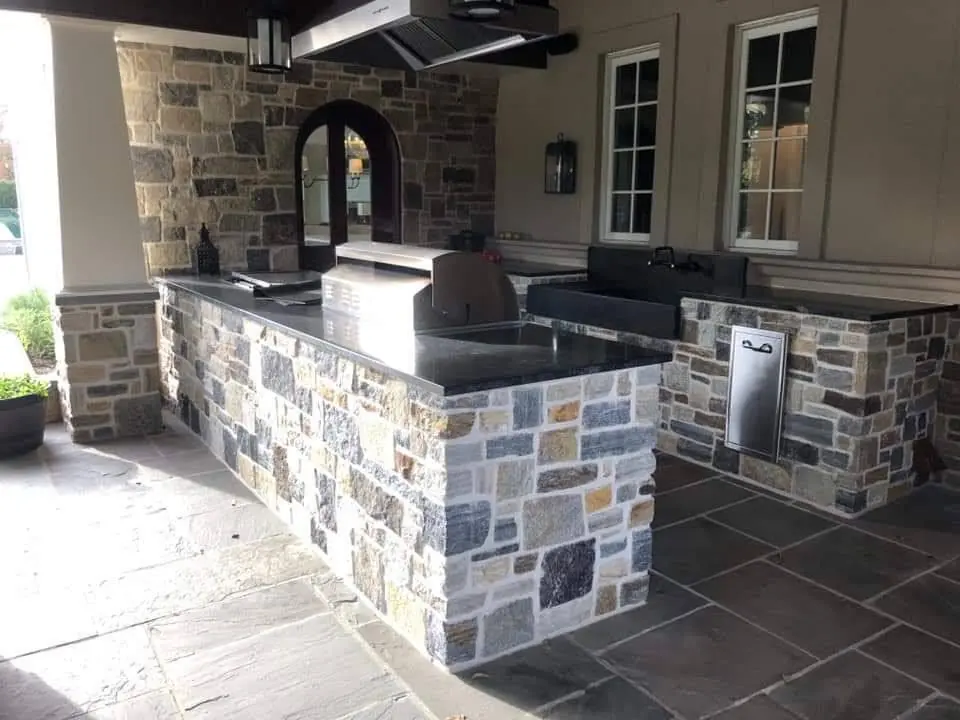
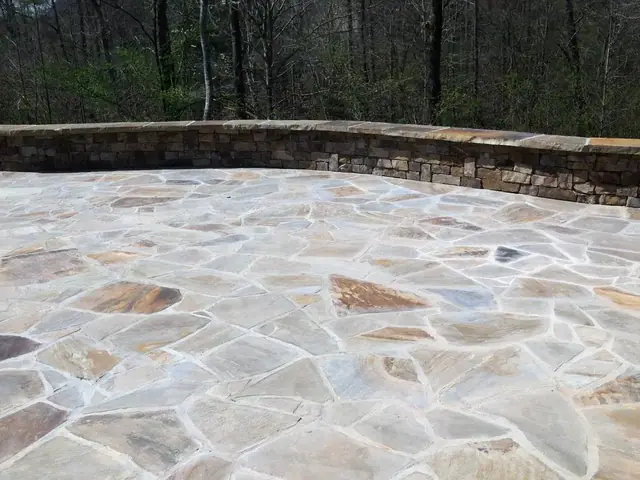
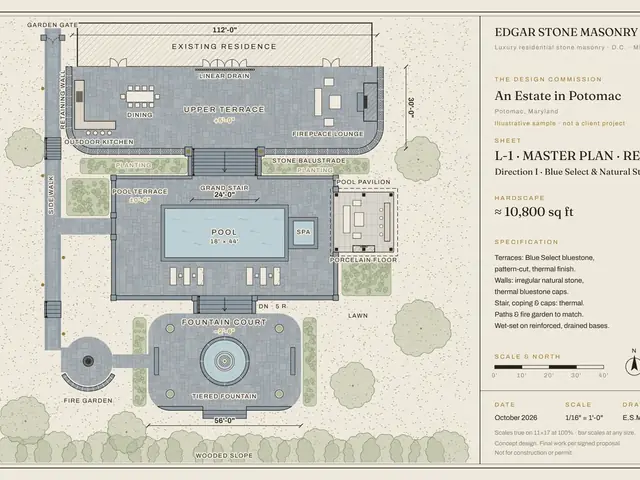
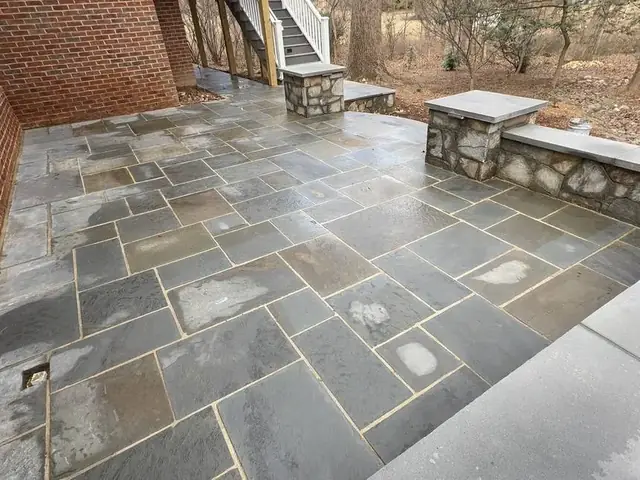
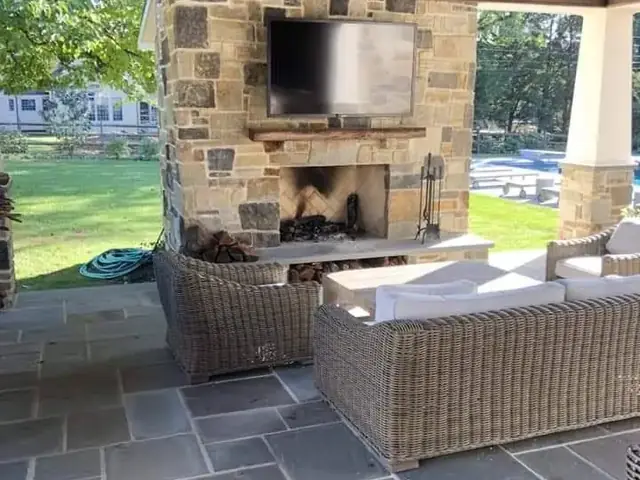
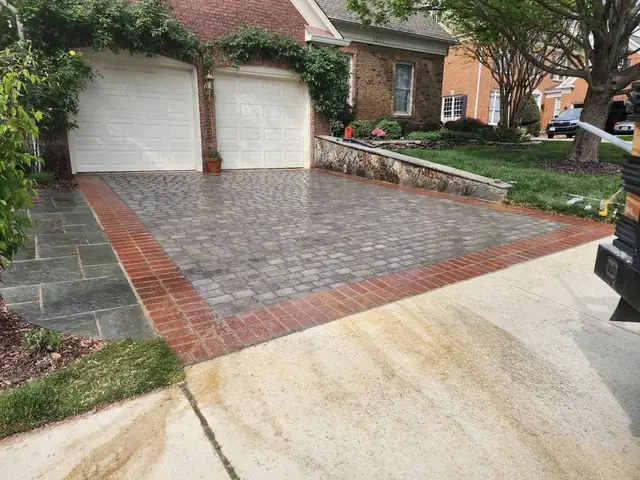
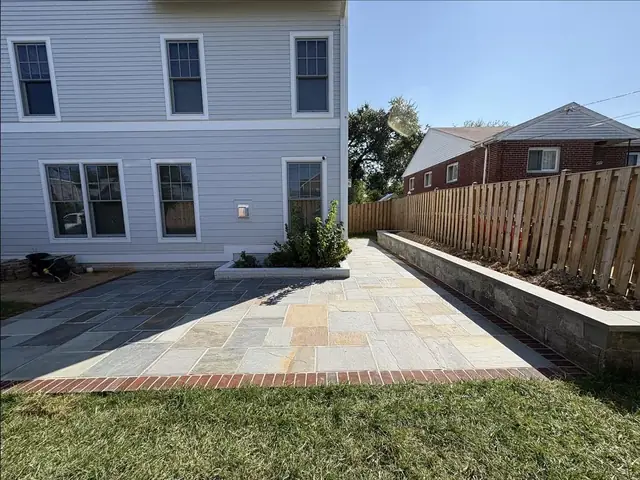
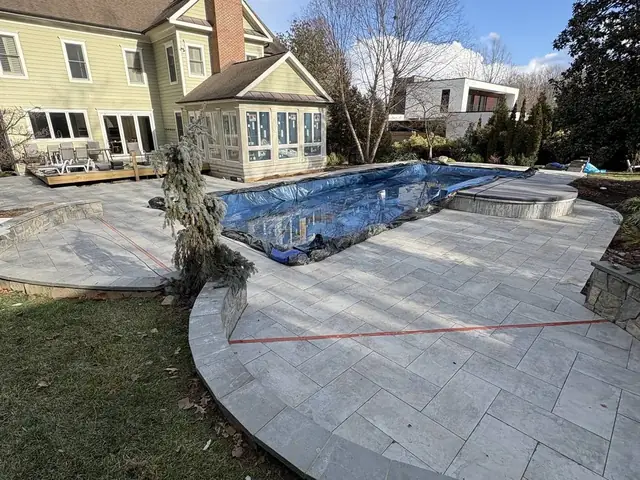
Bluestone and flagstone are sandstones formed over millions of years. Foot traffic, furniture and weather barely touch them in a human lifetime. So when a stone patio fails, the stone almost never failed. Something under it did.
The four things underneath.
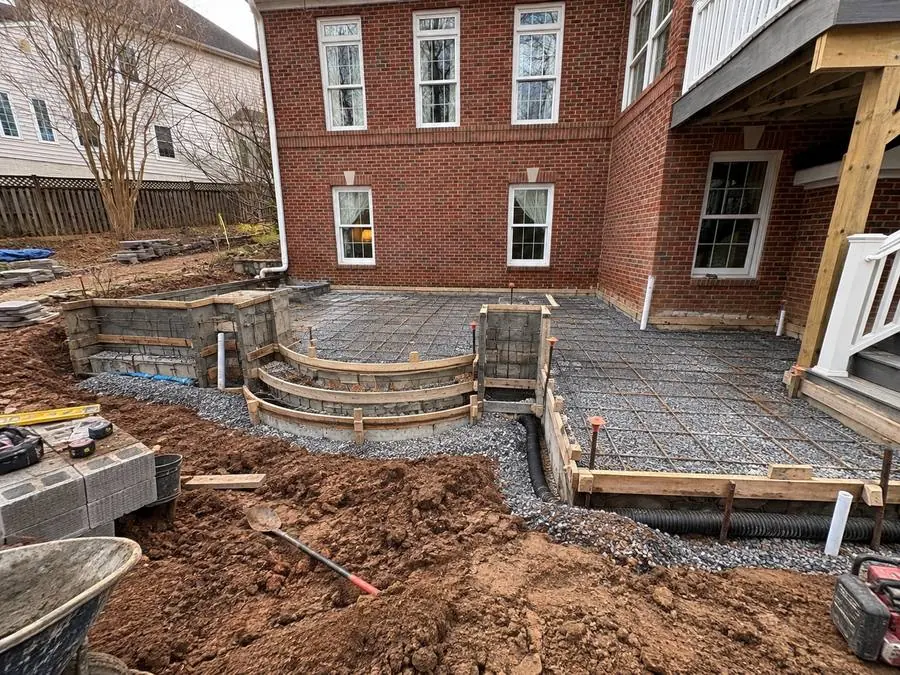
- The excavation. Topsoil and organic matter compress and rot. A patio built on them settles unevenly. We dig to firm ground before anything else.
- The base. Compacted aggregate, placed and compacted in lifts, carries the load and lets water move. Too thin, and it pumps and shifts every winter.
- The slab and the bed. For a terrace at the house, we wet-set stone in a full mortar bed on a reinforced concrete slab. The slab bridges small soil movement; the full bed means no hollow spots for water to collect and freeze.
- The water. Every surface needs a planned way for water to leave — pitch away from the house, and drains where the pitch can’t do the job alone. Water that stays is water that freezes.
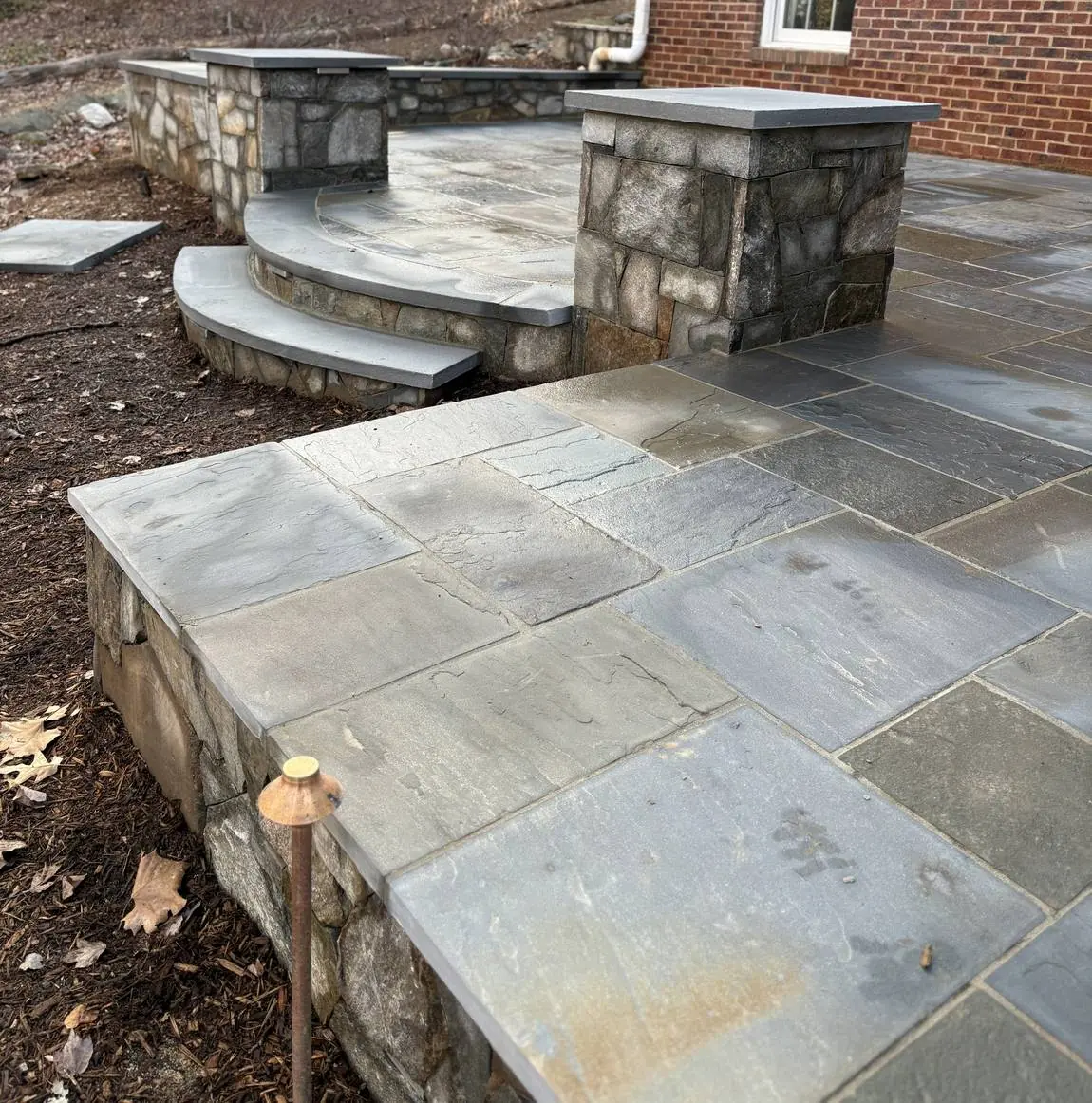
The one thing you can see.
The joints. Mortar joints are meant to be the sacrificial part of a stone surface — easier to renew than the stone. Over the years, sun, water and winter wear them. Keeping them full and sound keeps water out of the bed. On a well-built terrace, that’s most of the maintenance there is. Our guide to when stone needs repointing covers what to look for.
What shortens a patio’s life.
- Rock salt in winter — it soaks into joints and stone and refreezes. Use sand, or calcium magnesium acetate.
- Downspouts emptying onto the stone.
- Tree roots close to the edge.
- Heavy vehicles or equipment on a patio built for feet.
- Open joints left open through a winter.
Thinking about a terrace that outlasts the house? Ask Edgar to walk your property.