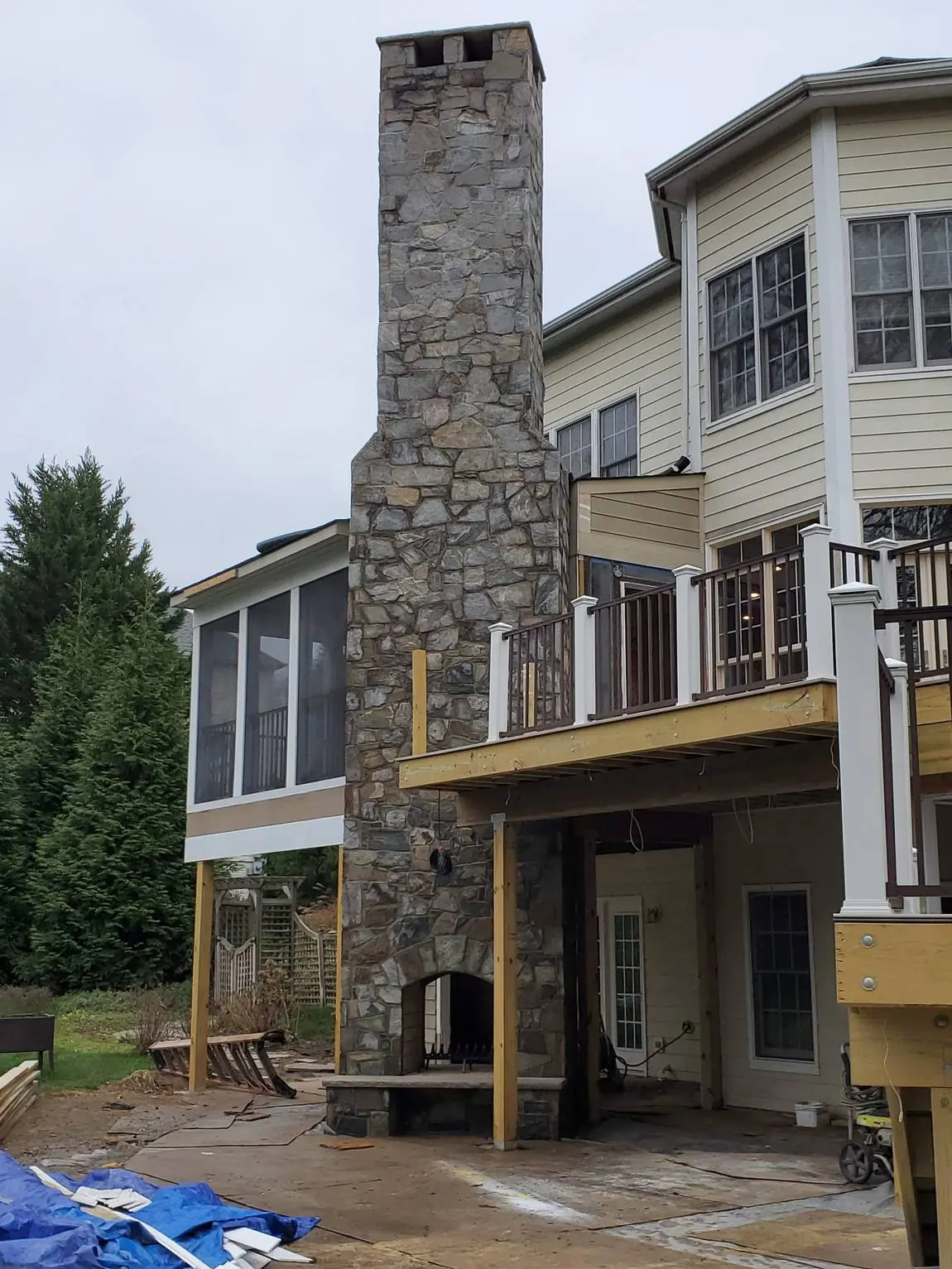
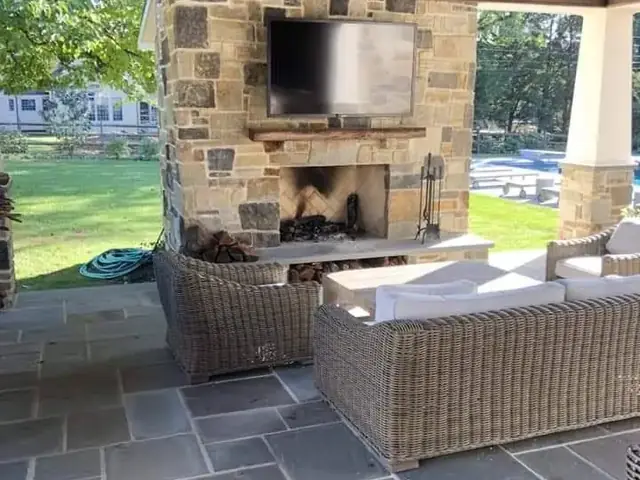
A tired brick fireplace is one of the most common reasons we’re called into a living room. The good news: if the brick is sound, it’s already the hard part. A fireplace wall built of brick is a strong, stable backing for natural stone — the work is in preparing that face and setting every stone so it reads as one piece.
Natural stone or manufactured stone?
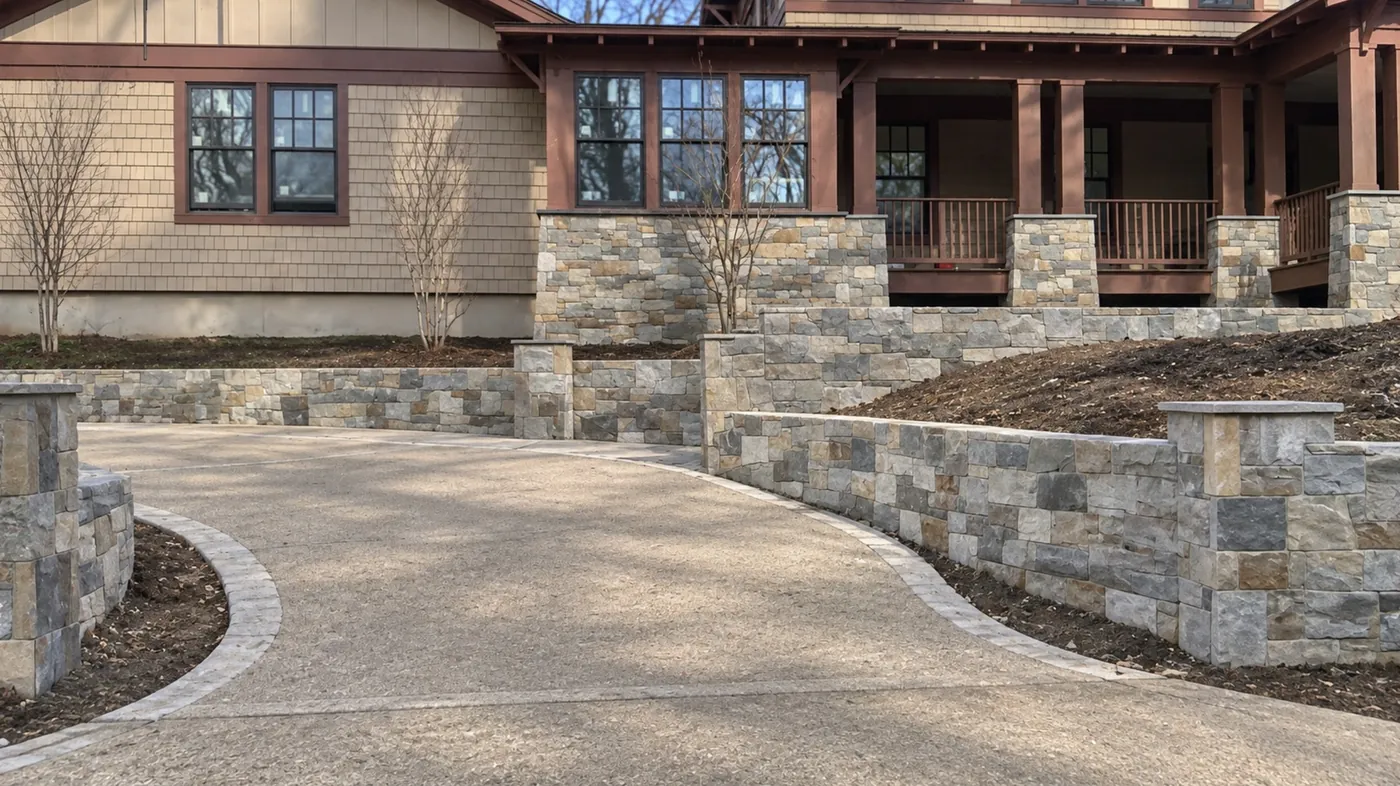
Manufactured stone is cast concrete, colored to look like stone. Natural stone veneer is real stone, cut thin enough to set on a wall. The difference shows over time: natural stone carries its color all the way through, so it doesn’t fade, and a chip never reveals a different color underneath.
- Natural thin veneer — real stone, cut to a manageable thickness, with matching corner pieces so the returns look solid.
- Full-bed stone — deeper and heavier; used when the fireplace is being built or the wall can carry it.
- Manufactured stone — lighter and uniform, but it is concrete wearing a stone color.
Can stone go straight over the brick?
Often, yes — once the face is ready for it. Clean, unpainted brick gives mortar something to grip. Painted, sealed or glossy brick does not, so the face is prepared first, usually with metal lath fastened to the brick and a scratch coat of mortar. Either way, the stone is bonded to a sound, rough surface, never to paint.
The opening, the mantel and the hearth.
- The opening. Stone is set to the firebox opening and finished cleanly — a natural stone face is non-combustible.
- The mantel. A wood mantel keeps the clearance the building code requires from the opening. A stone mantel or a bluestone shelf avoids the question.
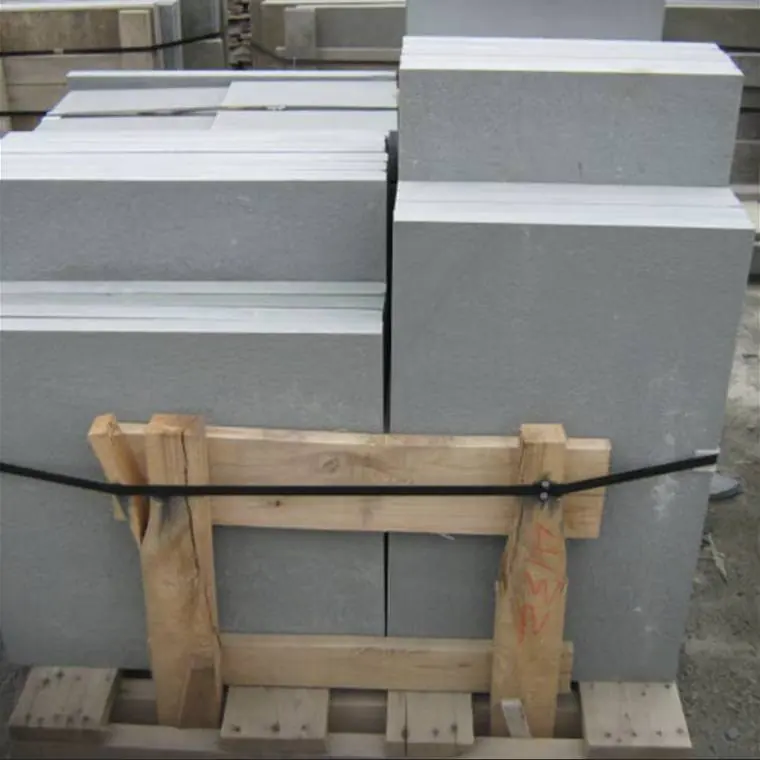
- The hearth. A single slab of bluestone, or stone matched to the face, set level and finished on the edges you’ll touch.
How it’s done inside a finished home.
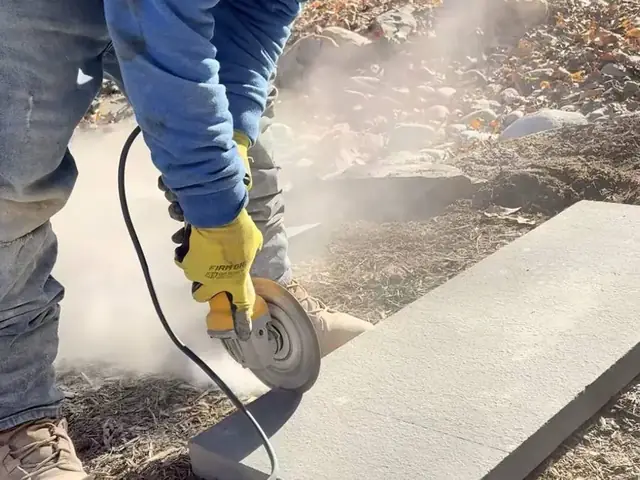
This is the part most people worry about, and it’s the part we plan most carefully. We work as a two-man crew: one mason stays outside, cutting and shaping every stone on the saw, so the dust and the noise stay out of the house. The other works inside, setting the stone. Floors and furniture are protected before the first stone comes in, and the room is cleaned at the end of every day.
What sets the price.
- The stone — natural thin veneer, full stone, and the stone’s grade.
- The size of the face — to the mantel, or all the way to the ceiling.
- Corners and returns — every outside corner is cut and fitted piece by piece.
- The brick’s condition — clean brick, or painted brick that needs lath and a scratch coat.
- The hearth and the mantel — a new bluestone hearth or stone mantel is its own line.
Edgar sees the fireplace before a figure is written. If you have a budget in mind, say so — the stone selection is where most of the room is. See our chimneys and fireplaces.