Bluestone, flagstone and fieldstone have weathered Mid-Atlantic winters for generations. Most of the winter damage we see on stone isn’t from the cold at all. It’s from the shovel, the salt bag and the downspout.
1. Leave the rock salt at the store.
Rock salt — sodium chloride — melts ice by turning it into brine. That brine soaks into stone and mortar joints, refreezes and expands from the inside, and the salt itself wears at joints and stone surfaces over time. For traction, use sand. If you need to melt ice, calcium magnesium acetate (CMA) is the gentlest common option. Whatever you use, sweep it off once the ice is gone.
2. Shovel with plastic.
A plastic shovel, or a blade with a rubber edge, clears snow without scarring stone. Metal ice choppers and steel scraper bars chip edges and the noses of stair treads. On a snow blower, set the skid shoes so the auger rides above the stone, not on it.
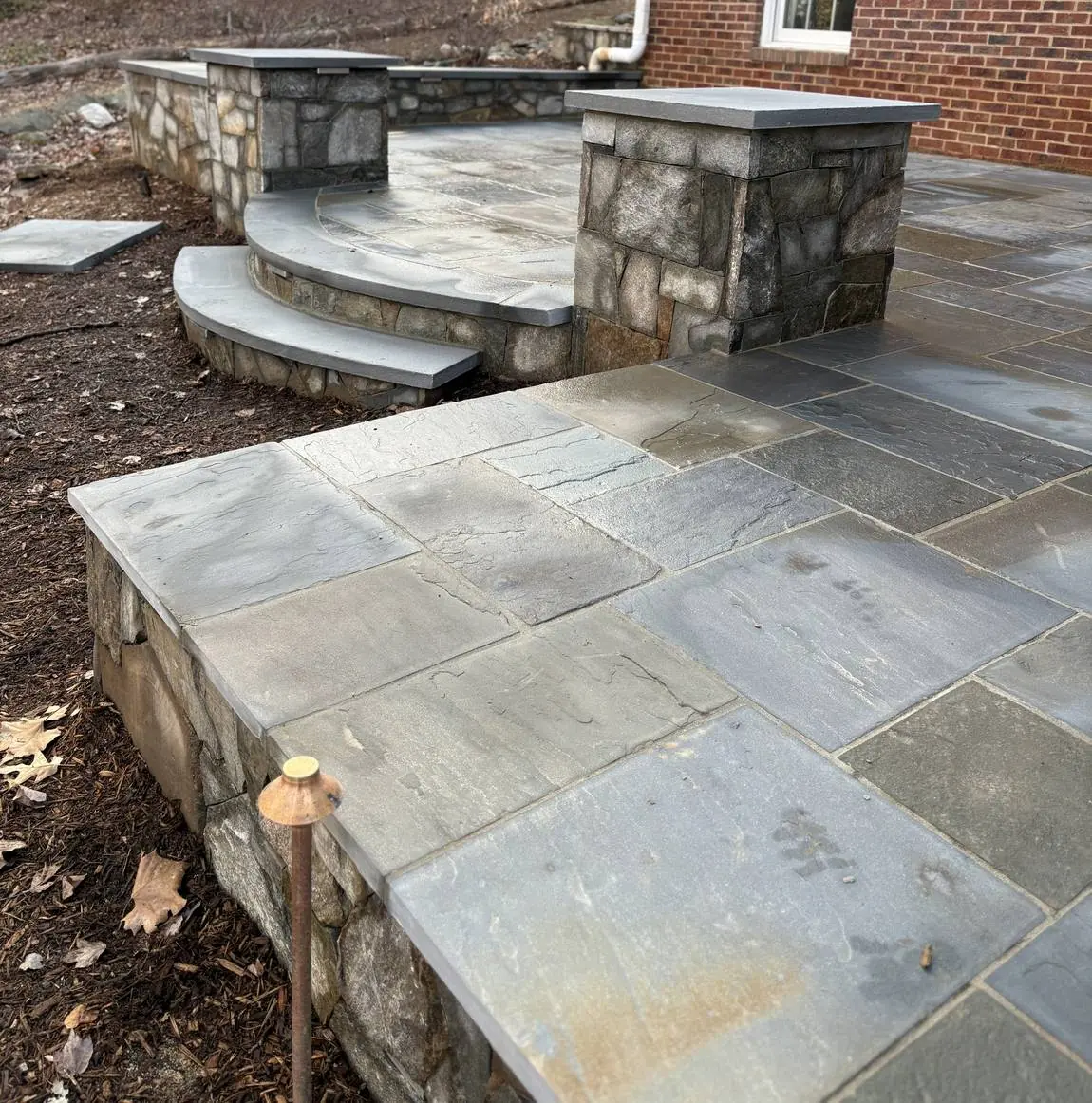
3. Don’t bury the walls.
Snow plowed or shoveled against seat walls, steps and the edges of a patio becomes meltwater sitting at the base for weeks. Pile it on the lawn instead.
4. Point the downspouts away.
A downspout emptying onto a patio, or behind a wall, delivers a winter’s worth of water exactly where you don’t want it — and then it freezes there. Extend it to the lawn or a drain.
5. The white haze is efflorescence.
A white, powdery haze on new stone or mortar is efflorescence: natural salts carried to the surface as moisture evaporates. It’s common in the first months, and after a wet winter. Brush it off dry with a stiff brush. Don’t hose it down — that feeds more salt to the surface — and never acid-wash natural stone. In most cases it fades on its own.
In spring: the five-minute walk.
When the snow is gone, walk your stone. Look for stones that rock, joints that have opened or cracked, a step pulling away, water that stands. Small issues caught in March are small repairs. If you find something, text the office a photo and we’ll tell you what you’re looking at.