Every spring, the same thing happens. The weather turns, the yard comes back to life, and homeowners across the region pick up the phone in the same few weeks. By then, the calendar is already spoken for.
Stone is set in mortar — and mortar needs warmth.
Wet-set stone is bonded with mortar, and mortar needs time above freezing to cure. The masonry industry’s standard specification, TMS 602, calls for special cold-weather procedures whenever temperatures fall below 40°F, and requires freshly laid masonry to be protected from the cold through at least its first day.
That’s why the heavy work of a stone commission concentrates in the warmer months — and why the warmer months fill first.
What winter is for.
- The site walk. Edgar walks the property, reads the grade and the drainage, and listens to how you want to live outside.
- The proposal. Scope, base and drainage, stone, price, schedule and warranty — in writing.
- The stone. Samples on site, against your house, in winter light.
- Permits. If your project needs one — in Fairfax County, for example, a retaining wall holding back more than three feet of earth — there’s time to handle it before the season starts.
- Your place in the calendar. Reserved, with a start window you can plan the spring around.
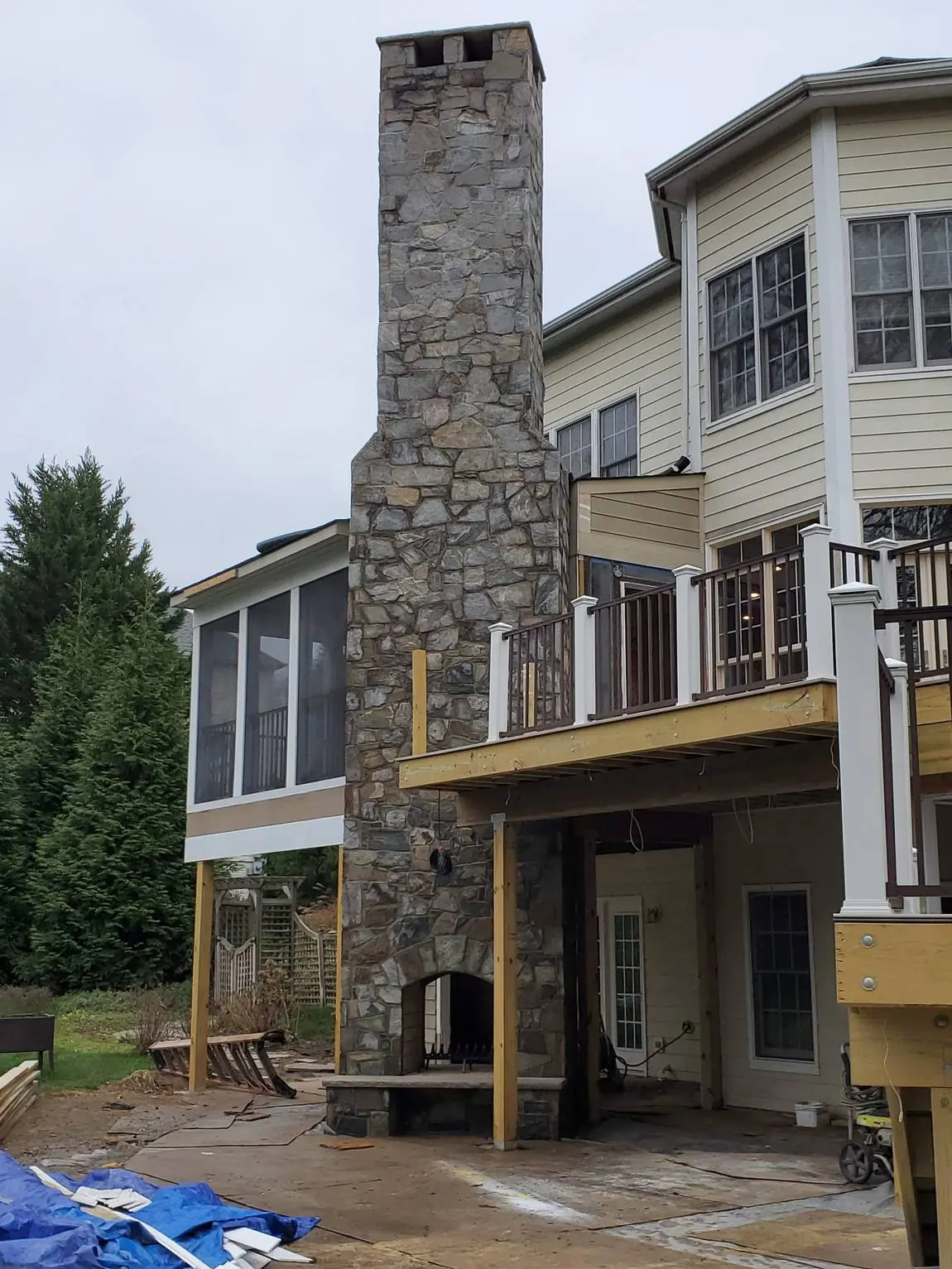
Why spring dates are limited.
Edgar personally leads every commission. That’s the reason to hire us — and it’s also a hard limit. We take on the projects Edgar can lead, and when the season is full, it’s full.
The Spring 2027 Book is open.
We’re reserving spring 2027 commissions now. Book a site walk this winter and you’ll have a finished proposal, your stone chosen and your start window set before the first warm week. Reserve your place in the Spring 2027 Book.