A stone patio doesn’t fail at the surface. It fails a few inches down, in the layer nobody photographs. When we’re called to a patio that has rocked, cracked or tilted, the stone on top is usually fine. What failed is the ground it was asked to sit on.
What heave actually is.
Water expands by about nine percent when it freezes. When water sits in the soil or gravel under a patio and the ground freezes, that expansion has to go somewhere — and the easiest direction is up. The stone lifts. When it thaws, the ground doesn’t settle back evenly. Repeat that enough times and a dead-level terrace develops ridges, rocking stones and open joints.
The D.C. region is hard on stone for exactly this reason. Our winters don’t stay frozen — they freeze and thaw, again and again, from December into March. Every cycle is another push from below.
Three ways a patio lets water in.
- A thin or uncompacted base. Topsoil and loose fill hold water like a sponge, and they keep settling long after the patio is finished.
- Nowhere for water to go. A patio pitched toward the house, or set lower than the lawn around it, collects runoff instead of shedding it. A downspout emptying onto the stone does the same.
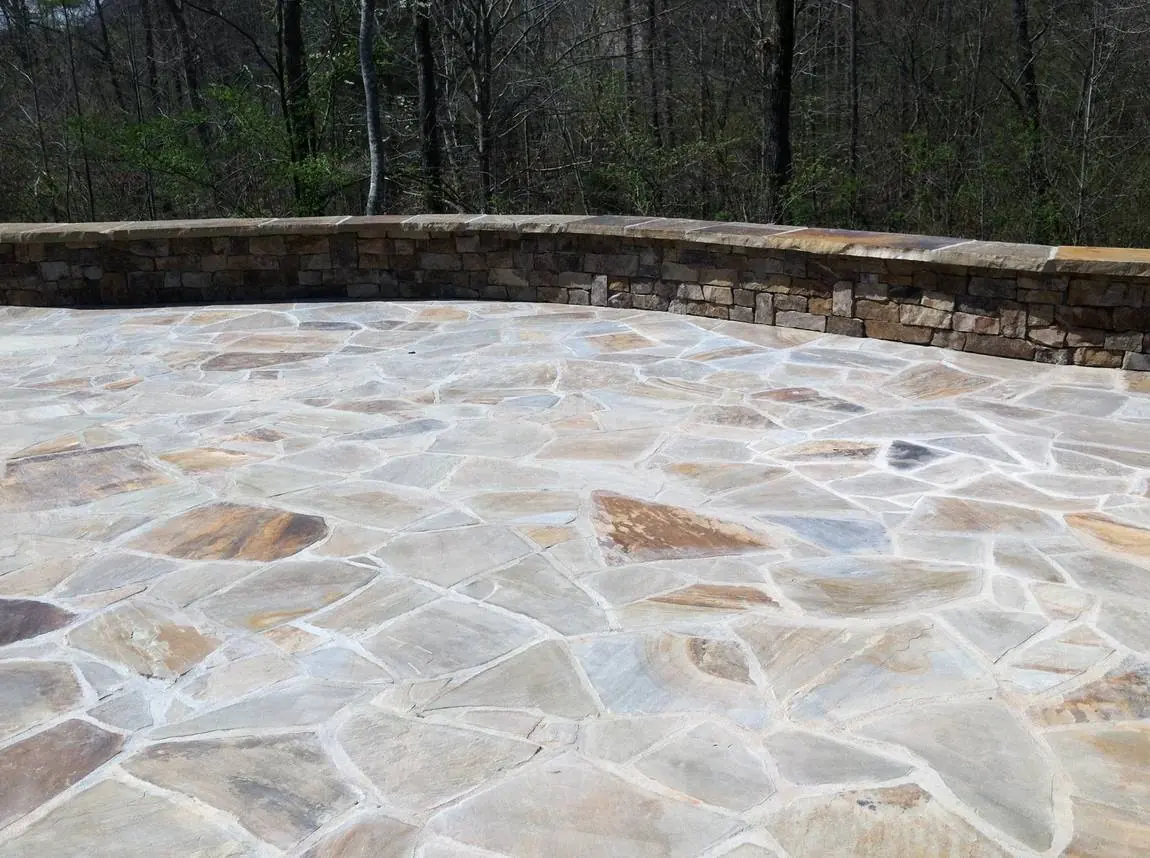
- Open joints. When joints crack or wash out, every rain goes straight into the base.
The ground itself matters too. Much of Northern Virginia and Montgomery County sits on clay that holds water and moves with it — and parts of Fairfax County sit on what locals call “marine clay,” notorious for swelling when wet and shrinking when dry. On soil like that, the base isn’t a detail. It’s the whole job.
How we build a patio that stays level.
The order matters more than the stone.
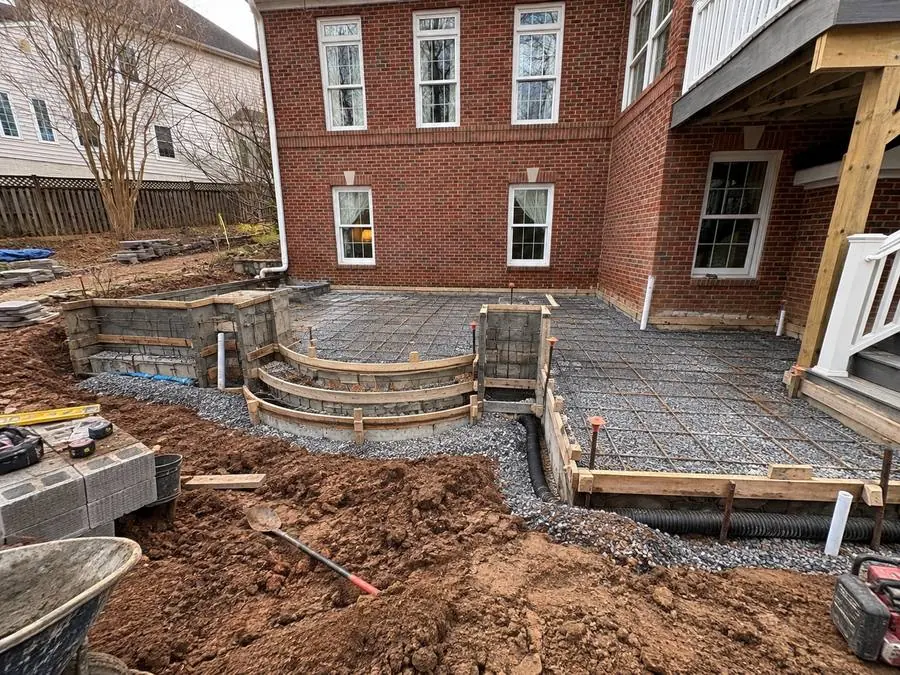
- Excavate past the topsoil and organic material, down to stable ground.
- Build a compacted stone base, in layers, so nothing under the patio is left to settle.
- Pour a reinforced concrete base — the slab the stone actually sits on.
- Pitch the surface away from the house — typically an eighth to a quarter inch per foot — so water leaves instead of soaking in.
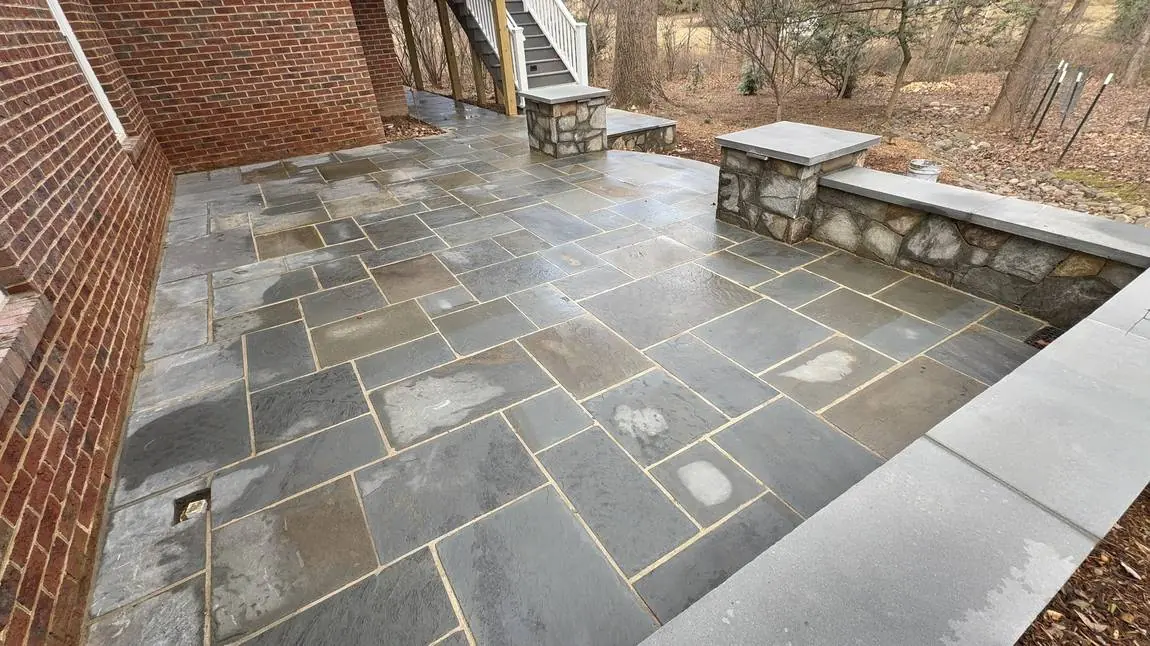
- Wet-set every stone in mortar and pack the joints, so rain stays on top and runs off.
Signs your patio is already moving.
- Stones that rock or click underfoot.
- Cracks running through the joints in a line.
- Puddles that are still there a day after rain.
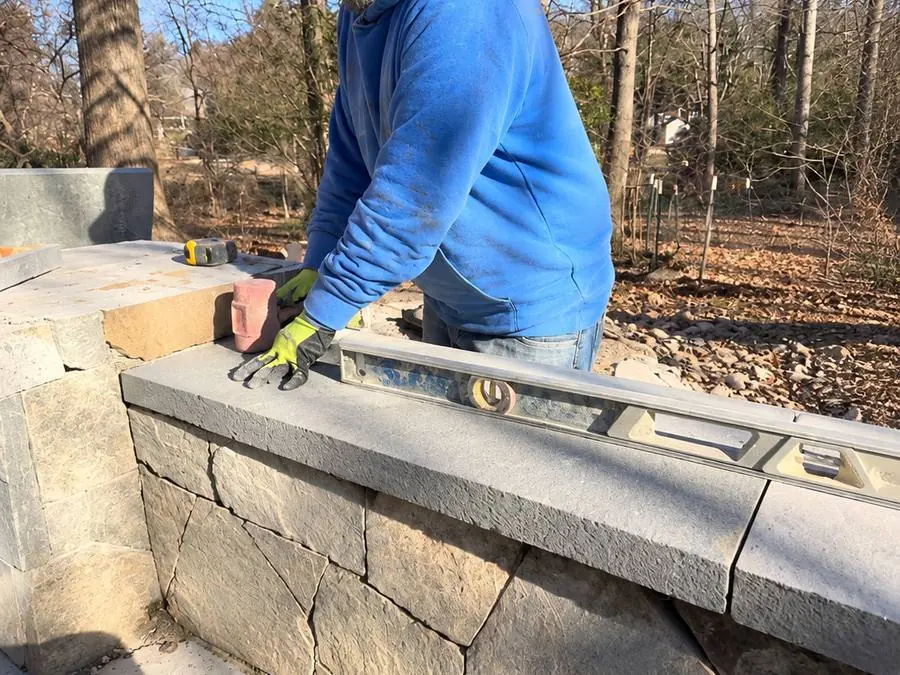
- A step or seat wall separating from the patio.
- A white haze that keeps coming back after every rain — water is moving through the stone.
Fix the cause, then the stone.
If the base is sound, a few loose stones can be reset and the joints repointed. If the base has failed, resetting the stone on top only buys a season. The honest repair is to lift the failed section, rebuild the base and the drainage, and set the stone again — matched to what’s already there.
Edgar walks every site before a figure is written, and he’ll tell you which one you have.