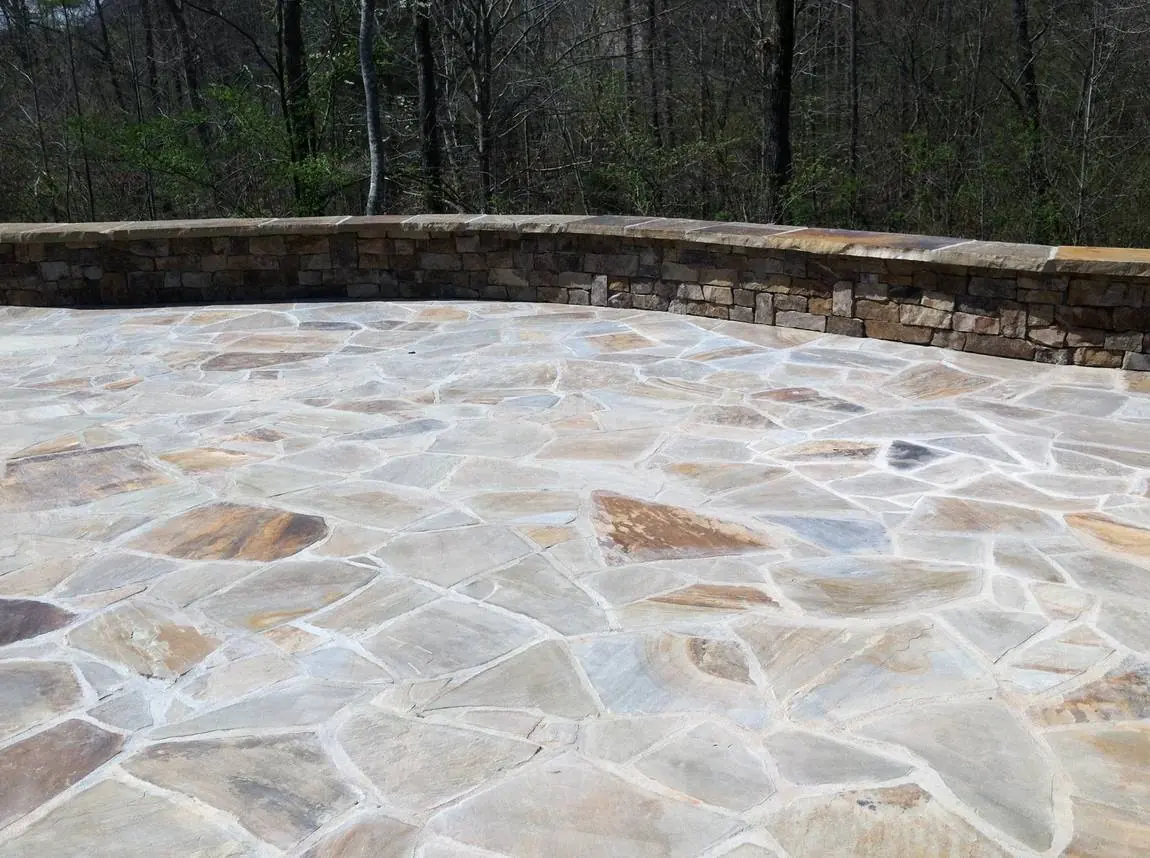
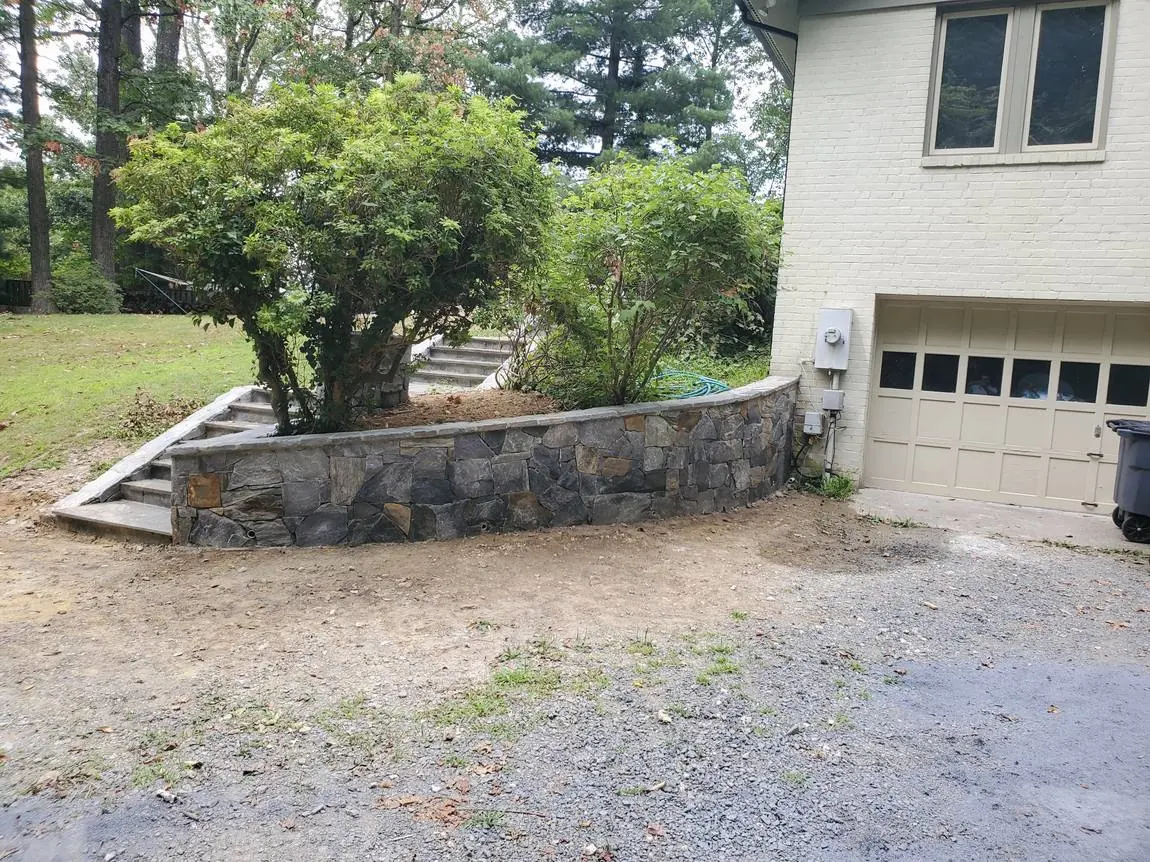
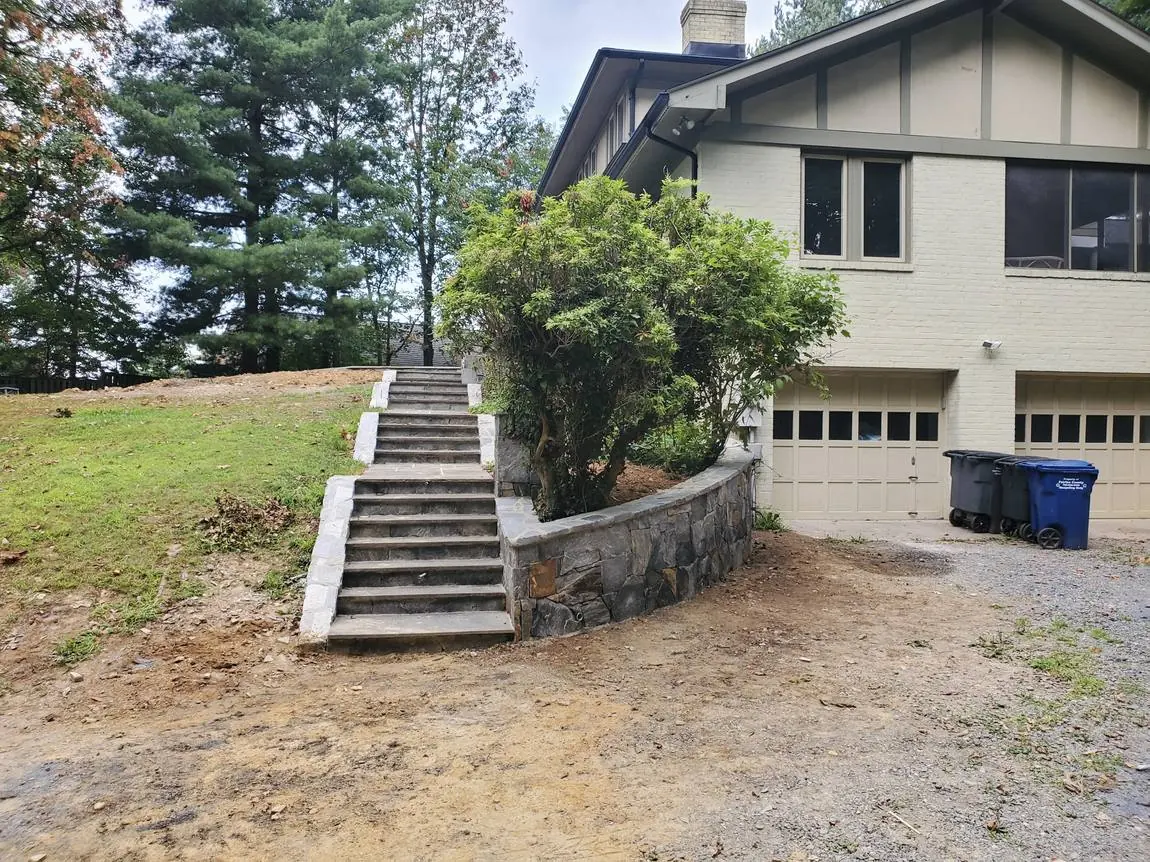
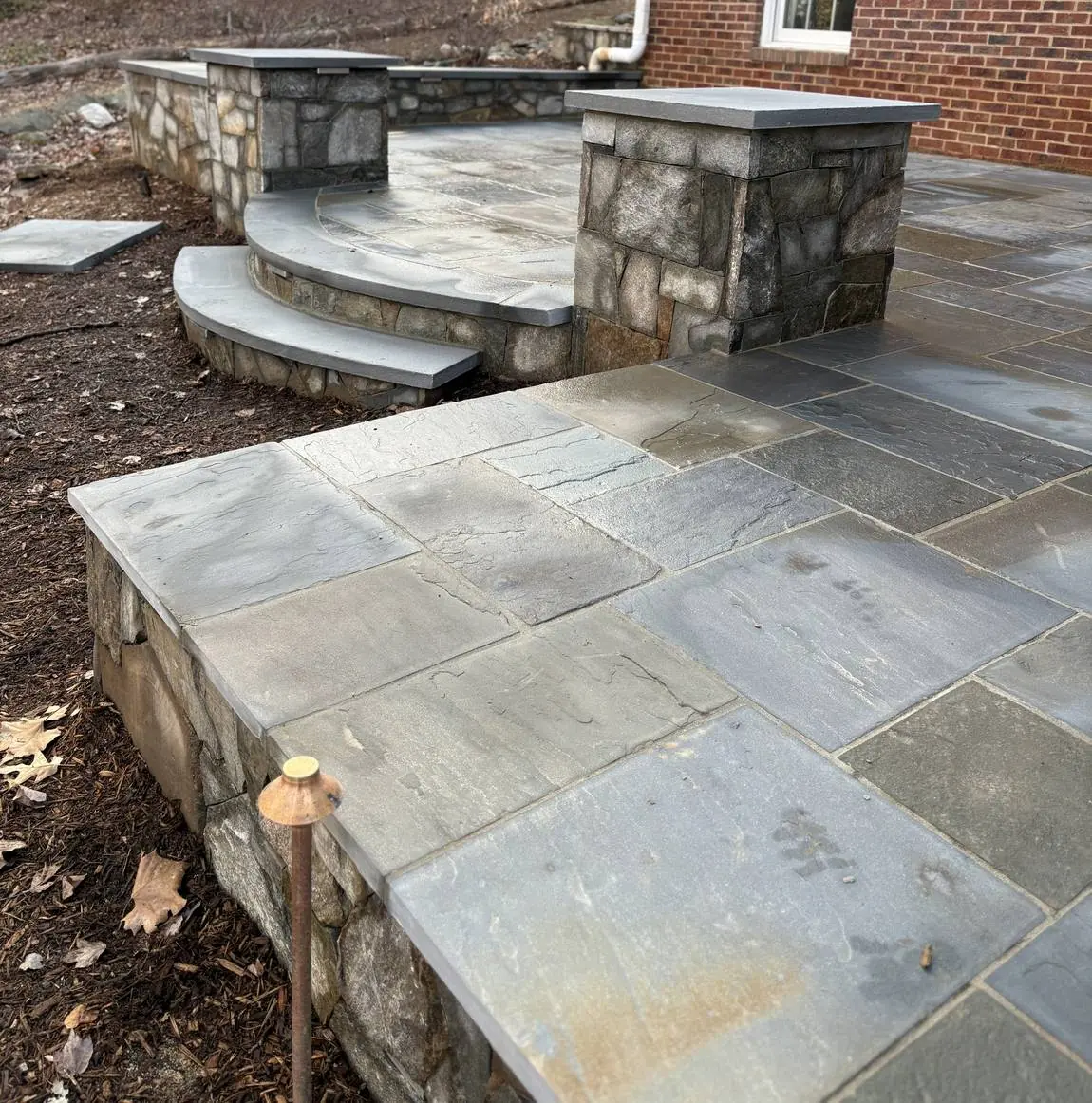
When two estimates for the “same” patio are far apart, this is usually why. One contractor is pricing stone on sand. The other is pricing stone in mortar on a reinforced slab. Both will call it a flagstone patio.
Dry-laid: stone on a flexible base.
A dry-laid patio sets flagstone on compacted gravel topped with sand or stone dust, and fills the joints with sand, stone dust or polymeric sand. Nothing is bonded. Each stone rests on its own bed.
- The advantages: lower cost, water drains down through the joints, and a single stone can be lifted and reset.
- The trade-offs: stones shift and rock over time, joints wash out, weeds and ants move in, and the edges creep unless they’re restrained.
Dry-laid has its place — garden paths, stepping stones, a casual sitting area at the edge of the woods. We’ll tell you when it’s the right call.
Wet-set: stone bonded to a slab.
A wet-set patio starts with a compacted base and a reinforced concrete slab. Each stone is bedded in mortar and leveled by hand, and the joints are packed and tooled. The result is one rigid surface.
- The advantages: it stays level, the joints stay tight and clean, nothing grows through them, and the edges stay crisp at steps and pool coping.
- The trade-offs: it costs more, and because water can’t drain through it, the surface must be pitched and drained correctly. A repair means cutting stone out and resetting it — not simply lifting it.
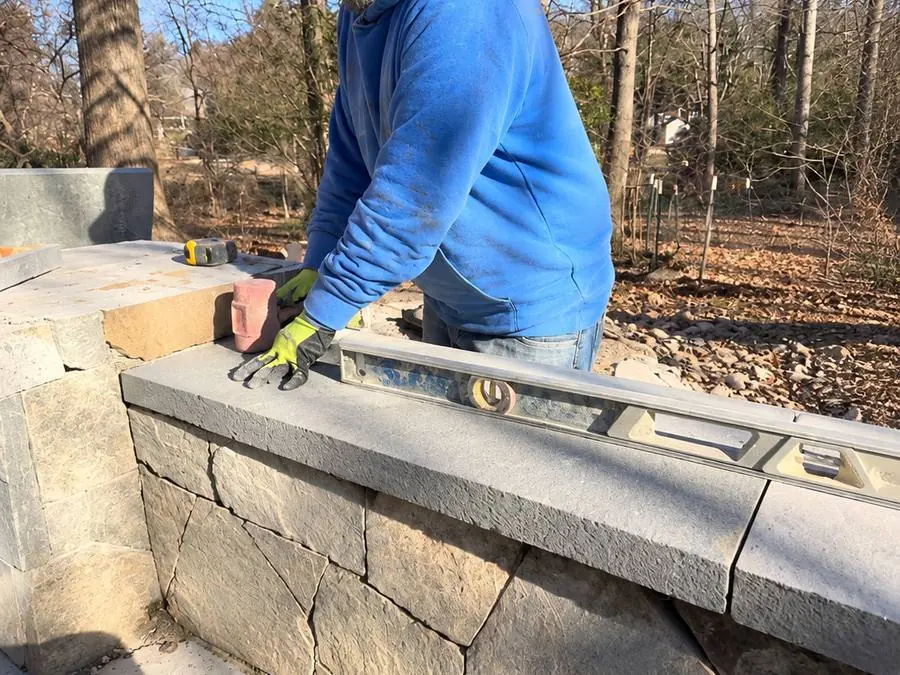
A wet-set patio is only as good as the slab beneath it. That’s where the money belongs.
Why we wet-set our terraces.
On the surfaces you live on — terraces, pool decks, entries and steps — we wet-set. These are the places where a rocking stone or an open joint isn’t cosmetic; it’s something to trip on, and a path for water into the base. Wet-setting takes more work and more material. It’s also why our written warranty runs ten years on the base.
What to ask any contractor.
- Is the stone wet-set in mortar, or dry-laid on sand?
- How deep is the excavation, and what goes into the base?
- Is there a concrete slab — and is it reinforced?
- Which way does the surface pitch, and where does the water go?
- What fills the joints?
- Is the warranty in writing — and does it cover the base, or only the stone?
If the answers aren’t in the estimate, ask for them in writing. Anything that isn’t written down isn’t in the price.