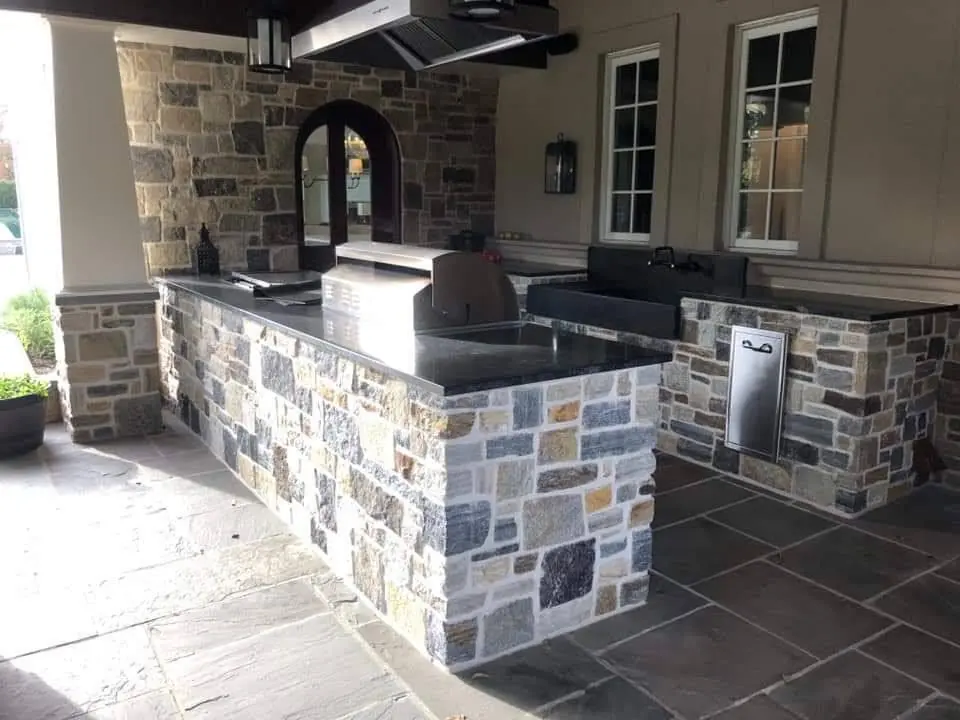
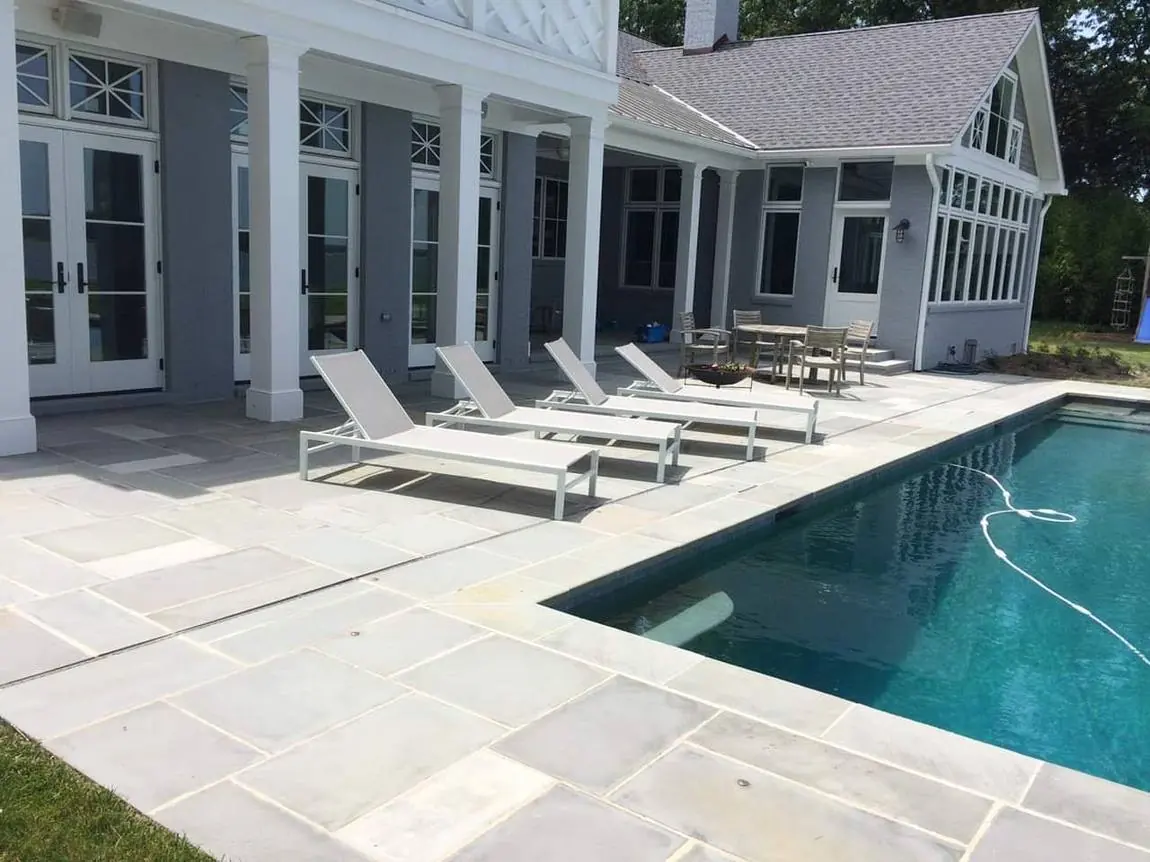
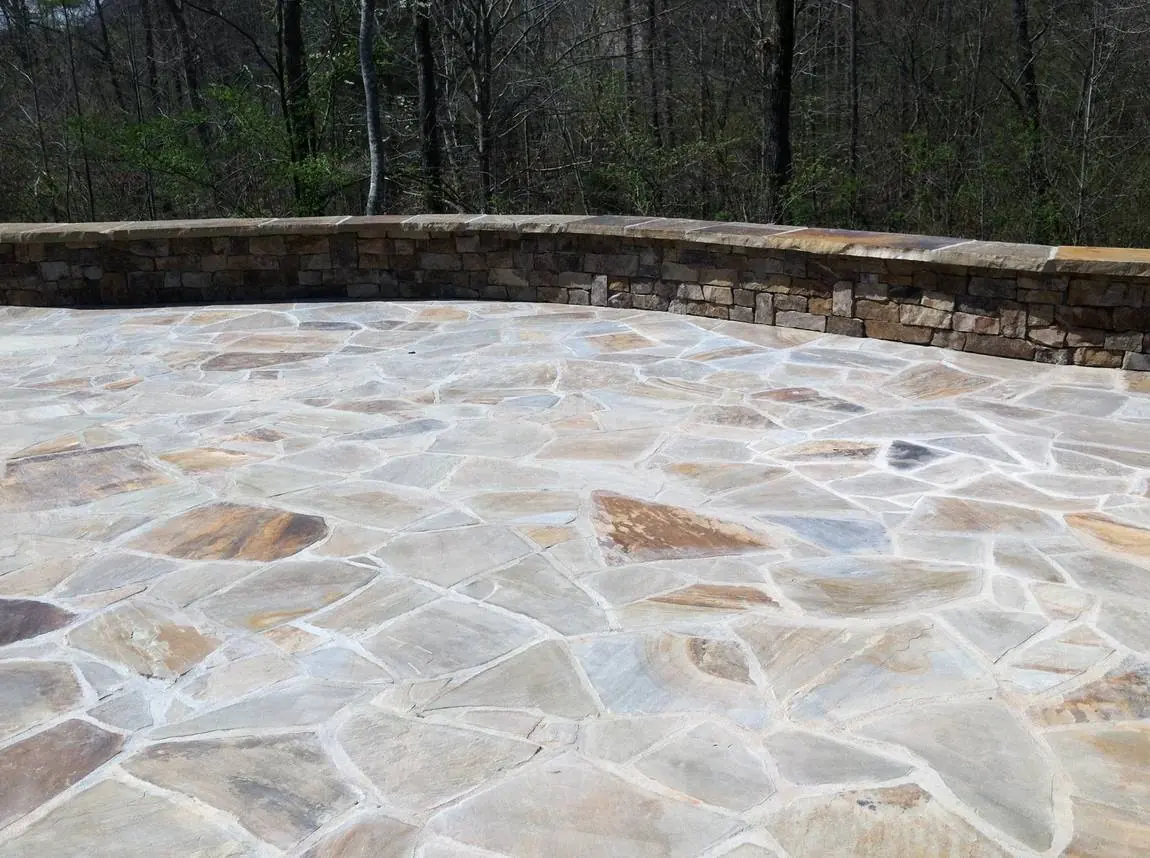
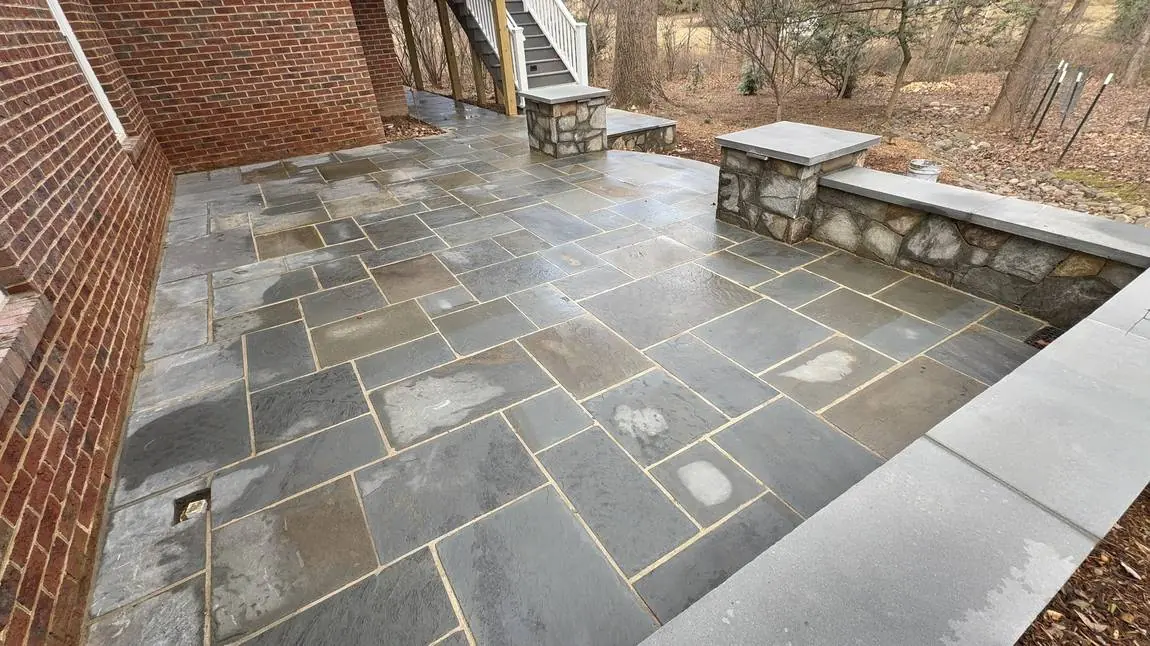
A stone estimate is a promise about things you’ll never see again once the job is done: what’s under the stone, how it’s held, and where the water goes. Here’s what to look for, line by line — before you ever look at the total.
Ten lines to read before the price.
- The scope, measured. Square feet of patio, linear feet of wall, the number of steps — and what’s being removed and hauled away. “Install patio” is how change orders begin.
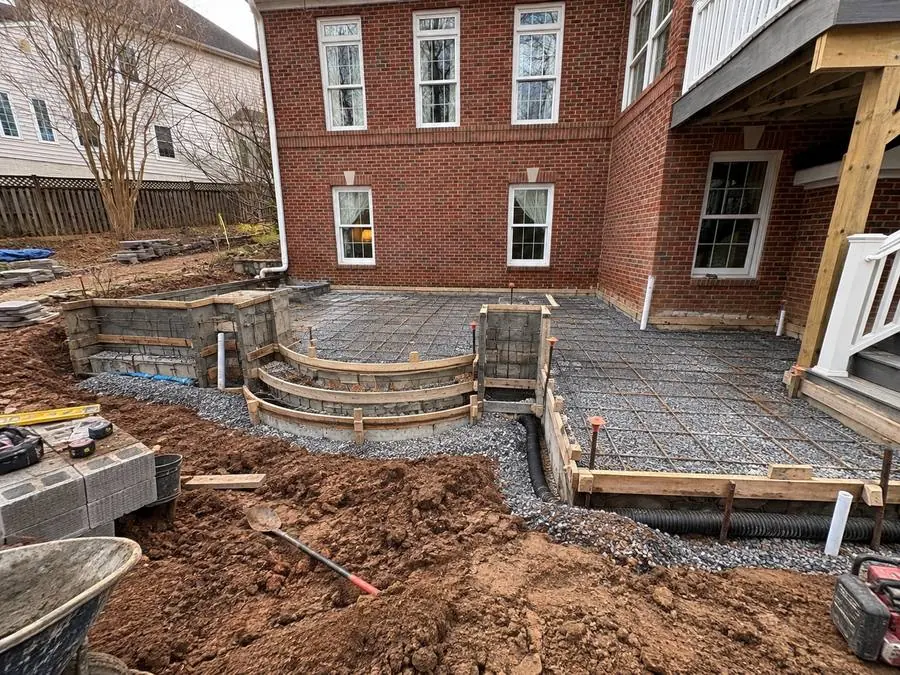
- The base. How deep the excavation goes, what the compacted base is made of, and whether there’s a reinforced concrete slab.
- The setting method. Wet-set in mortar, or dry-laid on sand. The difference is the patio.
- The drainage. Which way the surface pitches, where the water goes, and what happens to the downspouts.
- The stone, specified. “Blue Select, thermal finish” is a specification. “Bluestone” is not.
- Footings. Walls, steps, piers and fireplaces need their own footings, below the frost line.
- The warranty. In writing. How long, what it covers — the stone, the base, or both — and whether it transfers if you sell.
- Insurance. Ask for a certificate of insurance before work begins.
- The payment schedule. Deposit, progress and final — with the final payment due after the final walk, not before.
- The schedule. Approximate start and completion dates.
Why the cheaper number usually costs more.
The gap between two estimates almost always lives in lines two through six — the work you’ll never see. An estimate that skips the base or the drainage isn’t a cheaper patio. It’s an earlier repair.
What ours look like.
Every Edgar proposal is written and signed electronically: the scope, the stone, the price, the payment schedule, the approximate start and completion dates, and the warranty — five years on the stone, ten on the base, transferable to the next owner. Read the warranty.